
Find the Right Garage Bicycle Hanging Rack for Your Space
Find the Right Garage Bicycle Hanging Rack for Your Space
Start with how you use your bikes. A vertical wall-mounted garage bicycle hanging rack clears floor space and works well for bikes you ride often. Choose a swivel mount if handlebars would block a walkway, a sliding rail if you need to reach bikes in the middle of a group, or a ceiling hoist for a bike you use less often. If you cannot drill into the wall, consider a freestanding rack instead.
Before buying, count your bikes, check each bike's weight and tire width, and measure both wall space and clearance around your car. A rack that fits the bikes but makes them hard to take down will not make your garage easier to use.
I'm Chris Johnson, owner of Johnson Closet Co. My 30-plus years in custom storage design and installation shape how I assess a garage bicycle hanging rack: it should fit the space and make everyday access easier.
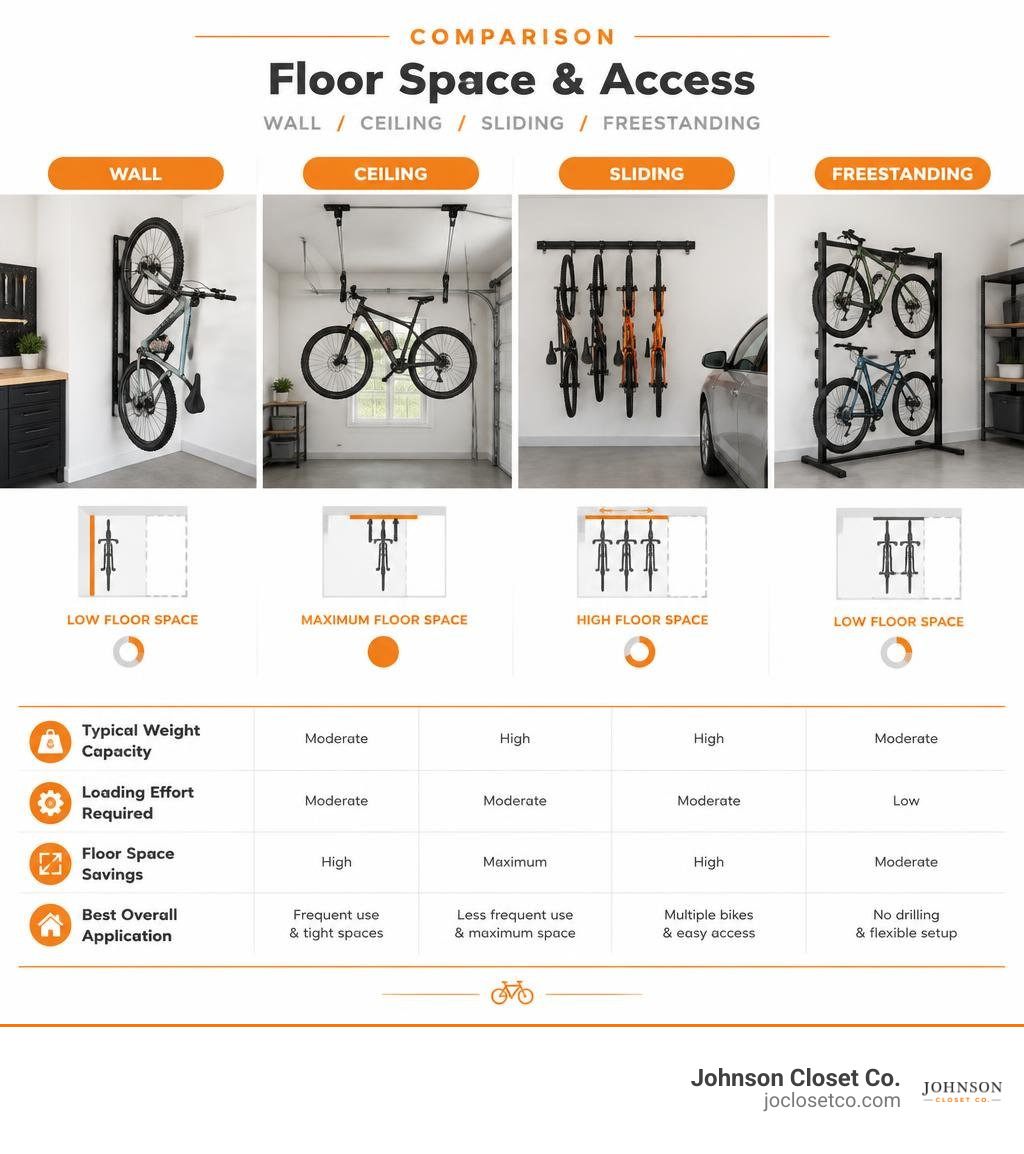
Core Types of Garage Bicycle Hanging Rack Systems
When setting up your garage layout, choosing the right physical mounting style dictates how much square footage you reclaim. Vertical bike storage can reclaim up to 80% of garage floor space compared to leaving bicycles propped up on traditional ground stands or kickstands. Below is an overview of how the primary hanging and standing styles compare across key operational factors.
| Storage System Style | Typical Weight Capacity | Loading Effort Required | Floor Space Savings | Best Overall Application |
|---|---|---|---|---|
| Vertical Swivel Wall Mount | 65 to 100 lbs per bike | Low (Roll-on designs eliminate lifting) | High (Folds nearly flat against wall) | Narrow garage corridors and heavy e-bikes |
| Ceiling Pulley Hoist | 50 to 100 lbs per unit | Low (Mechanical rope/pulley advantage) | Maximum (100% floor clearance) | High ceilings, seasonal storage, road bikes |
| Sliding Track & Rail | 300 to 600+ lbs total | Moderate (Vertical lift onto track hooks) | High (Compacts lateral footprint) | Multi-bike family setups (4 to 8 bikes) |
| Freestanding Tower Rack | Up to 300 lbs total | Moderate (Manual lift onto dual tiers) | Moderate (Preserves wall surfaces) | Rental properties or zero-drilling policies |
Every hanging system relies on solid structural anchoring. Whether fastening into wall studs or overhead ceiling joists, the weight of multiple frames requires secure installation. Enthusiasts often build clever DIY versions too, such as creating a sliding bike rack with scrap wood and skateboard trucks to organize a large fleet on a tight budget.
Vertical and Swivel Wall-Mount Racks
Vertical wall mounts hold the bicycle perpendicular or angled against the wall by cradling the front or rear wheel. Modern designs often include a 150-degree pivot feature, allowing you to swing parked bikes flat against the drywall to free up narrow walkways beside parked cars.
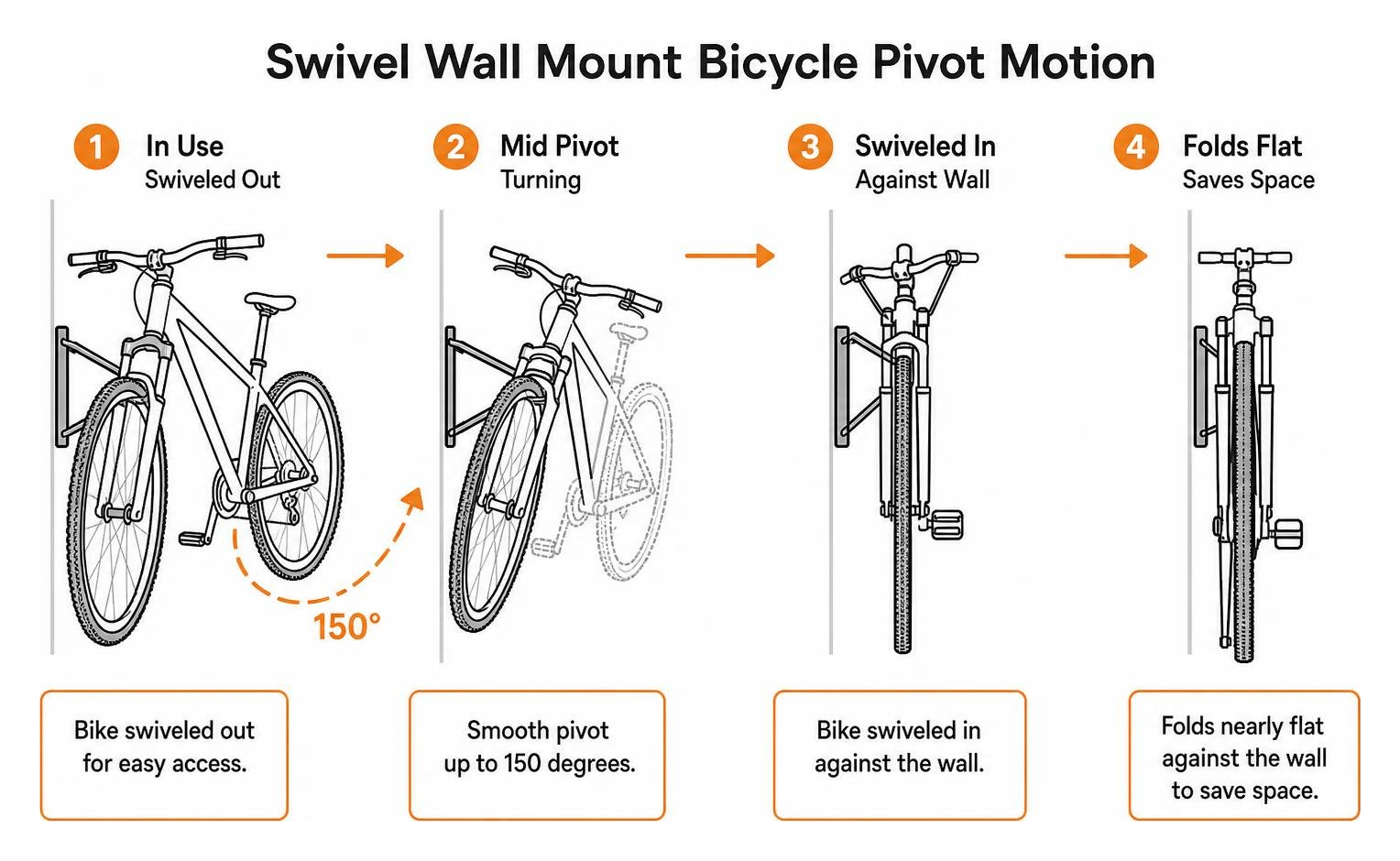
Many vertical systems feature roll-on loading, where you rest the rear tire on the floor, lift the front wheel slightly, and guide it into a padded wheel basket. Heavy-duty options can hold up to 100 lbs while swiveling smoothly to save corridor clearance. If you prefer low-profile single-point mounts, adding dedicated bike clips for garage wall spaces creates a compact, minimalist setup for lightweight road or commuter bikes.
Overhead Pulley and Ceiling Track Systems
When wall real estate is occupied by storage cabinets, workbench systems, or vehicles, overhead ceiling space is your best alternative. Mechanical hoists use rope locking systems and dual-pulley sets to lift a bicycle by its handlebars and saddle up toward the ceiling.
Ceiling units must anchor directly into structural ceiling joists to safely support suspended weight. Systems designed as heavy-duty ceiling bike hangers provide an ideal seasonal storage solution for bicycles not ridden during peak summer heat or cold winter spells. To learn more about overhead layouts, see our detailed guide on installing a bike hanger ceiling setup.
Sliding Track and Modular Rail Systems
Sliding track assemblies mount a horizontal metal channel along the wall or ceiling, holding multiple rolling trolleys equipped with padded bike hooks. Because each trolley glides laterally along the track, you can effortlessly slide neighboring bikes out of the way to reach a bicycle parked in the middle of a lineup.
Multi-bike families benefit immensely from modular rail channels. Many systems hold up to 600 lbs across six hooks (100 lbs per hook). Staggering hook heights along the track prevents wide mountain bike handlebars from tangling, keeping high-density storage organized and easy to access.
Freestanding and No-Drill Storage Stands
If you lease your home or have garage walls made of materials you prefer not to drill, freestanding racks offer strong vertical storage without permanent mounting hardware.
Heavy-duty commercial towers can support up to 300 lbs across 4 to 5 bikes using wide, stable baseplates and vertical uprights. Many use quick-pull 3D pin locking systems that let you adjust hook spacing on the fly, accommodating small children's balance bikes alongside full-sized cruisers on a single portable stand.
Key Features to Consider Before Buying a Rack
Selecting an ideal bike hanging rack requires balancing weight capacities, frame materials, and tire clearances.
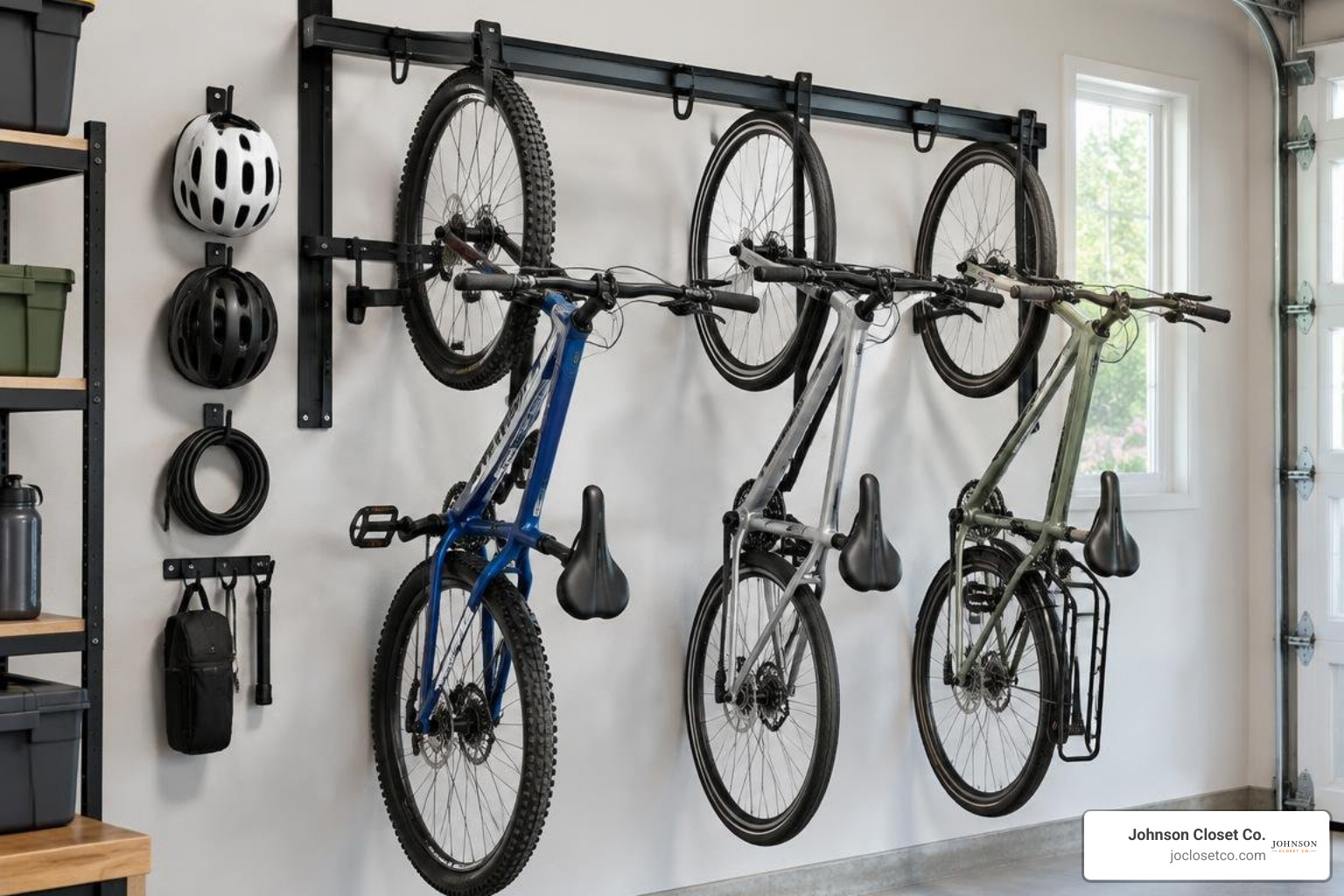
Look for these essential engineering specifications when shopping:
- Heavy-Duty Construction: Choose industrial powder-coated steel frames to resist garage humidity and prevent structural bending.
- Weight Ratings: Standard analog road bikes weigh 18 to 28 lbs, mountain bikes range from 28 to 35 lbs, and heavy electric commuter models easily reach 50 to 80 lbs.
- Tire and Rim Compatibility: Ensure wheel hooks accommodate modern tire widths. Standard road tires measure 1 inch, standard mountain bikes require 2.2 to 3 inches, and fat-tire builds need hook clearances up to 4.25 inches.
- Protective Coatings: Hooks should feature thick rubber or vinyl coatings to avoid scratching expensive carbon or alloy wheel rims.
If your household rides heavier motorized bicycles, explore our guide on finding a dedicated electric bike storage rack for garage spaces to ensure your system handles the extra weight safely.
Selecting the Best Garage Bicycle Hanging Rack for Mixed Family Bikes
Family bike collections rarely look identical. You might store a 20-inch kid's BMX, a 24-inch youth cruiser, a 29-inch adult full-suspension mountain bike, and a gravel commuter side-by-side.
Many modular systems handle mixed wheelbases by offering mounting brackets that adjust in 1-inch increments. Staggering hook heights up and down ensures wide handlebars do not collide with adjacent seats, protecting brake levers, dropper posts, and frame finishes.
Integrated Shelving and Gear Storage Accessories
A complete bicycle storage area keeps riding gear and hardware organized in one central hub. Several wall hanging models include integrated shelving directly above the bike hooks:
- Top Wire Mesh Shelves: Many hanging racks provide top shelves for helmets, hydration packs, and floor pumps.
- Accessory J-Hooks: Dedicated lower utility hooks keep bike locks, spare tubes, and riding shoes neatly off the concrete floor.
- Security Integration: If garage security is a priority, pair your hanging rack with a heavy-duty bike garage lock anchored to wall framing to deter opportunistic theft.
Safe Installation and DIY Wall Considerations
Mounting heavy bikes safely requires fastening brackets into solid structural framing rather than standard drywall.
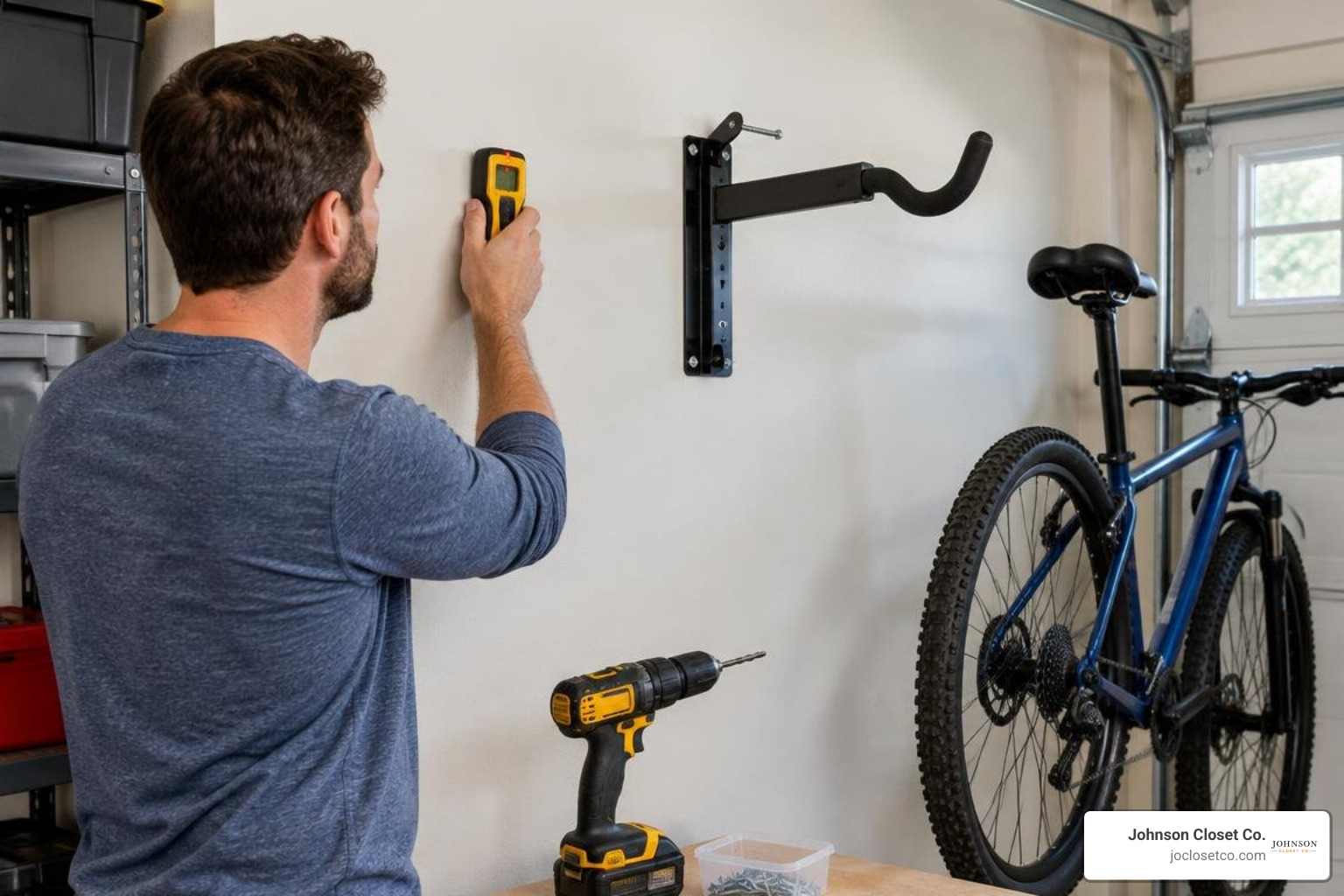
Always use a dependable magnetic or electronic stud finder to locate the centers of standard wood studs, typically spaced 16 or 24 inches apart on center. For concrete, brick, or block walls, use a masonry drill bit and heavy-duty steel sleeve anchors or masonry lag bolts. Review our foundational guide on storing bicycles in garage layouts before picking your drill bit.
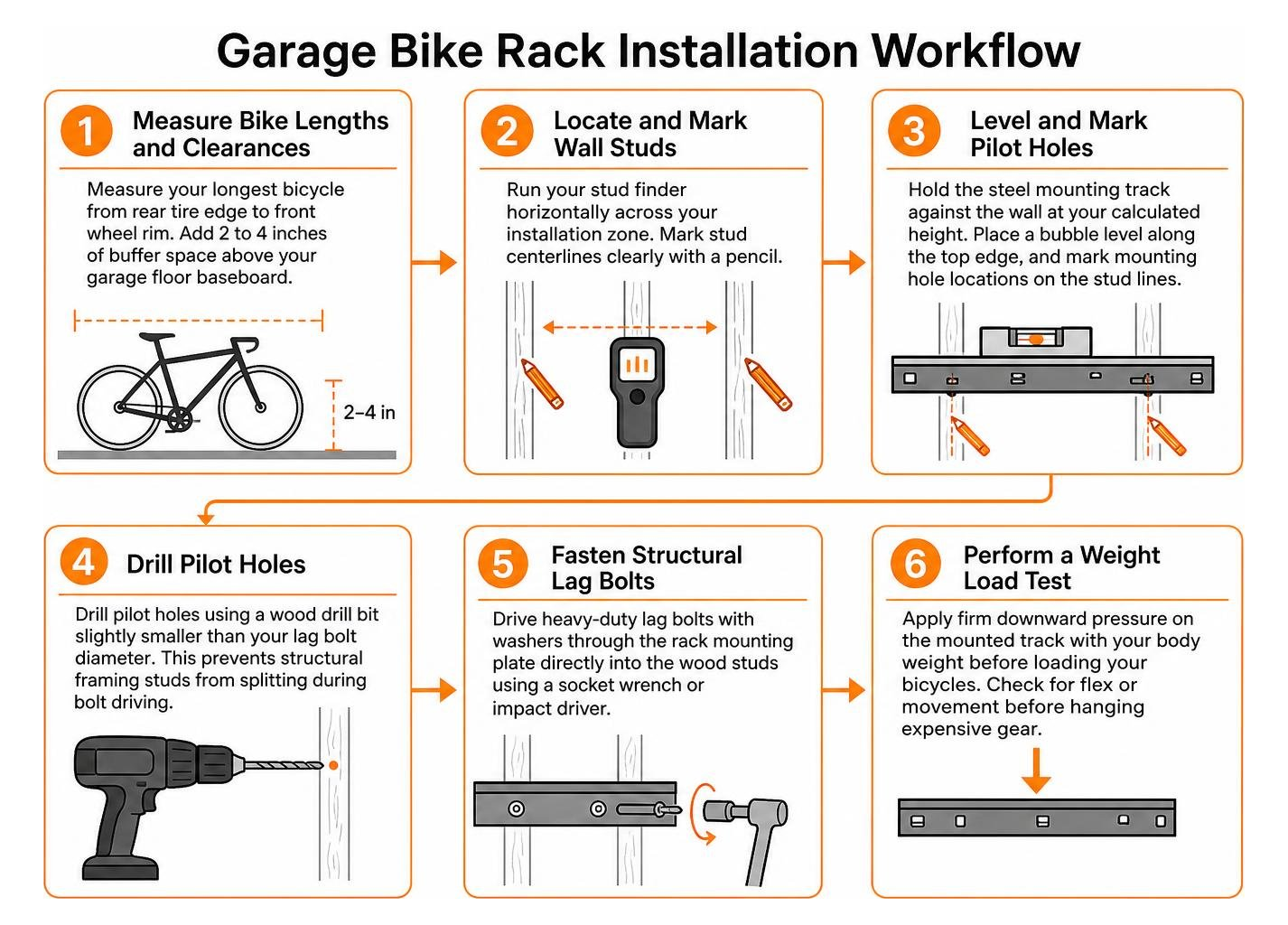
Step-by-Step Installation of a Garage Bicycle Hanging Rack
Follow this systematic process to mount your horizontal rail or vertical hanging brackets securely:
- Measure Bike Lengths and Clearances: Measure your longest bicycle from rear tire edge to front wheel rim. Add 2 to 4 inches of buffer space above your garage floor baseboard to ensure tires hang clear of ground debris.
- Locate and Mark Wall Studs: Run your stud finder horizontally across your installation zone. Mark stud centerlines clearly with a pencil.
- Level and Mark Pilot Holes: Hold the steel mounting track against the wall at your calculated height. Place a bubble level along the top edge, and mark mounting hole locations on the stud lines.
- Drill Pilot Holes: Drill pilot holes using a wood drill bit slightly smaller than your lag bolt diameter. This prevents structural framing studs from splitting during bolt driving.
- Fasten Structural Lag Bolts: Drive heavy-duty lag bolts with washers through the rack mounting plate directly into the wood studs using a socket wrench or impact driver.
- Perform a Weight Load Test: Apply firm downward pressure on the mounted track with your body weight before loading your bicycles. Check for flex or movement before hanging expensive gear.
Frequently Asked Questions About Garage Bike Storage
How much weight can a standard garage hanging bike rack support?
Weight capacities vary by design and construction. Single vertical wall hooks typically support up to 30kg (approximately 66 lbs). Multi-bike horizontal steel track systems can support 300 to 600 lbs total (rated around 100 lbs per hook). Heavy e-bikes require dedicated racks rated specifically for 75 to 100 lbs per slot.
Will hanging a bike by its wheel damage the rim or tire?
No. Hanging a bicycle by its wheel on a rubber-coated hook does not bend aluminum rims, damage carbon wheels, or stress spokes. The weight of an entire bicycle (20 to 60 lbs) is far less than the dynamic loads applied when an adult rider pedals, corners, and hits road bumps. For hydraulic disc brakes, hanging a bike vertically can occasionally allow small air bubbles in poorly bled lines to travel into the lever; if the brakes feel soft when taken down, pull the levers a few times to restore firm line pressure.
What is the most cost-effective way to store multiple bikes in a tight garage?
Single steel utility hooks fastened into wall studs offer a straightforward budget setup for under $20. For multi-bike organization, modular steel rail kits priced between $60 and $150 let you hang 4 to 6 bikes vertically while easily adjusting hook spacing as your bike collection evolves. If you prefer a simple single-frame wall hanger, explore our guide to choosing a dedicated cycle hanger for garage spaces.
Conclusion: Maximizing Vertical Space in Your Garage
Getting bicycles up off the floor changes how your entire garage functions. By matching your bike collection to the right vertical swivel, sliding rail, ceiling hoist, or freestanding system, you protect valuable frames and keep your vehicles and workstations easily accessible.
At Johnson Closet Co., we help homeowners throughout the Phoenix Valley—including Scottsdale, Gilbert, Chandler, Mesa, and Tempe—turn cluttered garages into functional, organized spaces. Our custom-manufactured garage cabinetry, slatwall systems, and dedicated storage solutions integrate bike racks directly alongside your everyday tools and sporting equipment.
Explore our full range of tailored garage cycle storage options to build a clean, reliable setup tailored to your home.