
Core Bike Garage Lock Types: Mechanical, Electronic, and Smart
Securing bikes in a garage requires anchoring certified mechanical, electronic, or smart lock systems directly to concrete floors or structural wall studs. Choosing the right locking mechanism balances daily convenience with physical resistance against tools like pry bars, bolt cutters, and cordless angle grinders.
When reviewing your options for storing bicycles in garage spaces, locks generally fall into three distinct categories:
| Feature / Metric | Mechanical Systems | Electronic Keypads | Smart Access Systems |
|---|---|---|---|
| Primary Credential | Physical key (e.g., Abloy, disc tumbler) | Numeric PIN / Master Code | Smartphone App, RFID, NFC, Transit Card |
| Tamper Resistance | Heavy physical hardening, anti-drill plates | Hardened housing, code-tamper lockouts | Multi-point latching, instant alarm forwarding |
| Power Dependency | None (100% passive) | Battery or low-voltage hardwired | 110/230VAC on-grid or off-grid solar + battery |
| Access Management | Physical key copying / manual rekeying | Manual code updates at the unit | Cloud dashboard, instant remote revocation |
| Standard Certifications | Sold Secure Diamond, ART, SKG-IKOB | UL listings, IP54+ weather ratings | SKG-IKOB (KE 470), DIN EN 79008-1 |
| Best Application | Dedicated single-user anchors & lockers | Shared family garages, small workshops | Multi-user bike rooms, commercial hubs, high-traffic home garages |
Mechanical High-Security and T-Handle Locking Systems
Mechanical lock setups remain the gold standard for pure, unyielding physical strength. These systems use heavy-duty materials such as case-hardened steel shackles, reinforced strike plates, and specialized lock cylinders like rotating disc tumblers (such as Abloy mechanisms). Because they contain no electronic components, they are immune to power failures, dead batteries, and digital glitches.
Heavy-duty commercial bike lockers frequently pair mechanical strength with ergonomic T-handle assemblies. These handles seat deeply into heavy composite or steel doors, preventing pry bars from catching an edge. High-security mechanical locks also feature integrated anti-drill plates that spin freely when attacked by drill bits, frustrating common burglary methods. The primary trade-off is key management: if you misplace a high-security key, replacement requires ordering from certified locksmiths with your key registration card.
Electronic Keypads and Hardwired Access Units
Electronic keypad locks eliminate physical keys by relying on a numeric PIN code to trigger internal motorized deadbolts or high-strength solenoid latches. These units are typically powered by standard alkaline or lithium batteries, with heavy-duty commercial installations utilizing low-voltage hardwired power alongside backup batteries.
Electronic locks are particularly practical for families or active households where multiple people need regular access. Parents can assign separate codes for kids or temporary codes for guests and cleaners. When shopping for electronic locks, look for models featuring illuminated keypads for dim garages, incorrect-code lockout penalties to stop brute-force guessing, and external 9V jump-start terminals in case the primary batteries deplete completely while the unit is locked.
Keyless Smart Bike Garage Lock Systems
Smart locking systems integrate internet-of-things (IoT) connectivity with physical access control hardware. Rather than memorizing codes or fumbling for keys in the dark, users unlock their storage using a smartphone app, an RFID fob, an NFC badge, a local transit card, or a dynamic QR code.
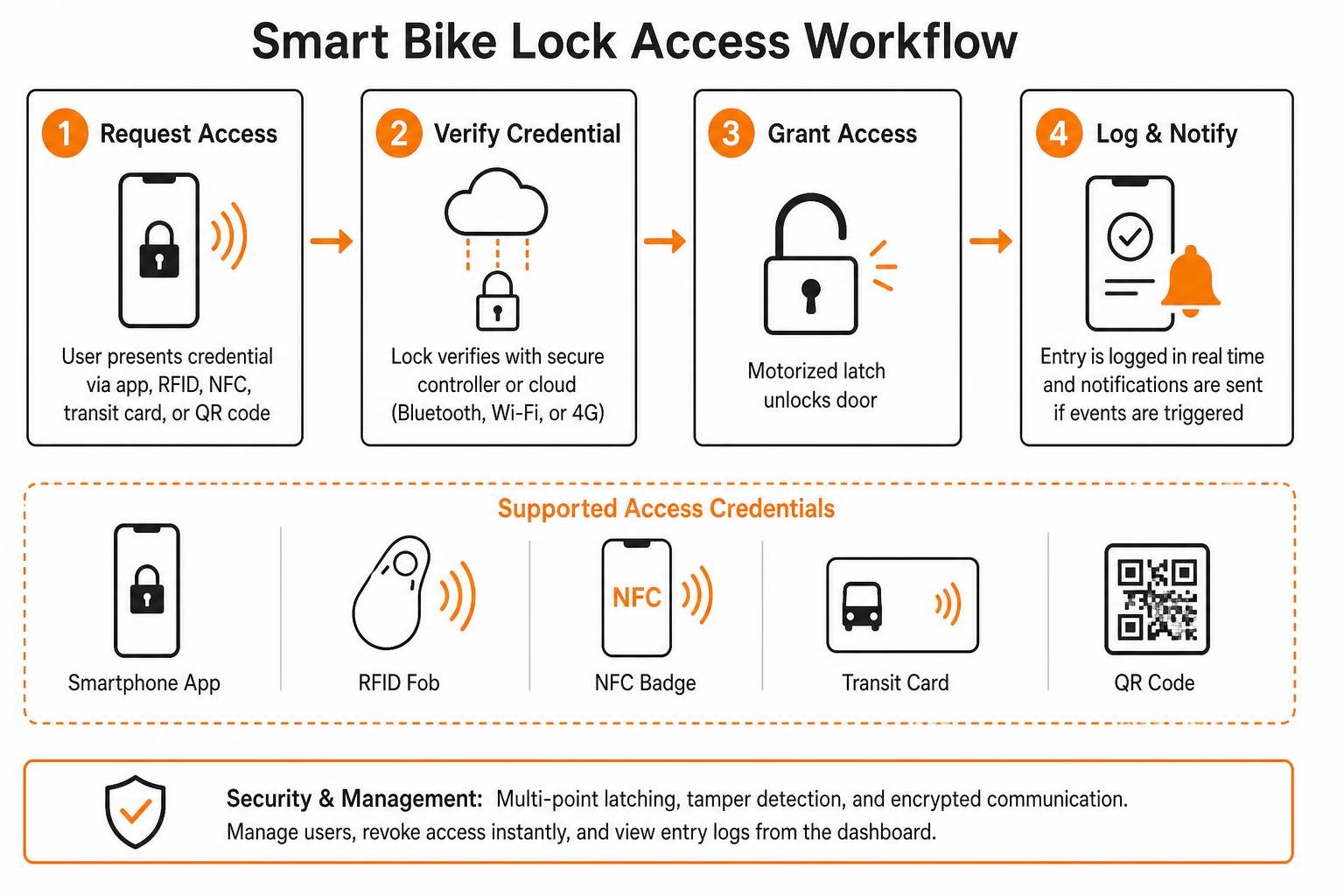
These systems communicate over encrypted Bluetooth, local Wi-Fi, or industrial 4G cellular links. They allow property owners or facility managers to grant temporary access, track entry logs in real time, and receive instant push notifications if an unauthorized attempt triggers an internal motion or tilt sensor.
To maximize safety, smart locks should always be combined with municipal protections; for instance, local cyclists should ensure their equipment is documented through the Chandler police bicycle registration guidelines to assist recovery if theft ever occurs beyond the home.
Storage Scale and Structure: Matching Locks to Your Garage Setup
Securing a single commuter bike requires a different structural setup than locking down a fleet of family e-bikes or outfitting a multi-tenant residential garage. Locking hardware must anchor directly into building structures—such as poured concrete slabs or structural wall studs—to prevent thieves from carrying the locked bike away entirely.
When mapping out dedicated garage cycle storage, you need to choose an anchoring style that complements both the physical space and the number of bikes being secured.
Securing Individual Bikes on Garage Walls
Wall-mounted storage is ideal for saving floor space in standard home garages. However, hanging a bike by its rim does not stop theft unless a physical locking point is built into the wall assembly.
When using high-strength bike clips for garage wall mounting, pair the hanging bracket with a dedicated wall anchor. Heavy-duty anchors feature hardened carbon-steel rings bolted into wall studs using countersunk, tamper-resistant lag bolts or expanding masonry sleeves.
A high-security U-lock or 12mm+ hardened steel chain passes through the bike frame, rear wheel, and wall anchor ring simultaneously, ensuring the bike cannot be lifted off its mount even if the garage overhead door is compromised.
Securing Multi-Bike Garage Areas
For multi-bike households, community bike rooms, or multi-family properties, collective storage units offer efficient footprint utilization while maintaining security. These enclosures typically use gas-strut-assisted canopies coupled with two-point latching systems.
For higher density requirements, collective walk-in units can hold up to 20 bicycles within a single weatherproof, crane-lifted module. These multi-bike enclosures protect against theft and shield gear from the elements, using heavy internal pull-out rails capable of supporting up to 25 kg per bicycle slot while integrating automated electronic locks.
Integrating Locks with E-Bike Charging Areas
Electric bicycles introduce specific locking challenges due to their weight (often 50–70+ lbs) and high monetary value. Modern high-security lockers and storage racks integrate charging infrastructure directly alongside locking mechanisms.
When planning an electric bike storage rack for garage configurations, look for systems that house 110V/230VAC outlets inside the locked compartment. This allows the battery and charging brick to stay secured behind locked panels while charging overnight, protecting expensive power packs from theft and mechanical damage.
Key Security, Power, and Management Features to Evaluate
Investing in a high-grade bike garage lock setup requires looking beyond the basic padlock shackle. Commercial standards and municipal codes—such as those referenced in the Scottsdale municipal bike parking standards—highlight the necessity of certified locking hardware, secure anchoring, and weather-resistant construction.
Connectivity, Cloud Dashboards, and Power Infrastructure
Modern smart locks rely on steady communication pathways to provide real-time status updates and over-the-air (OTA) firmware patches. Industrial setups employ integrated 4G SIM cards that bypass local Wi-Fi networks, ensuring constant uptime even if the home router drops offline.
Through centralized cloud management consoles, garage administrators or homeowners can:
- Grant time-limited guest access via SMS or mobile app.
- Check real-time occupancy and lock engagement status.
- Monitor battery charge levels and schedule preventative maintenance.
- Automate alarm forwarding to alert building security if forced entry is detected.
For standalone or detached garages lacking hardwired electrical feeds, off-grid power assemblies pairing low-draw electronic control units with high-efficiency solar panels and deep-cycle backup batteries ensure non-stop security without expensive trenching.
Durability, Weatherproofing, and Corrosion Protection
Garages are harsh environments subject to high humidity, seasonal temperature swings, and blowing dust. Locks and enclosures must withstand these forces without jamming or corroding.
Industrial composite enclosures utilize structural compression-molded composite (SMC) that is rustproof, flame-resistant (UL V-1 certified), and finished with graffiti- and UV-resistant polyurethane coatings. For metal structures, look for hot-dip galvanized steel frames combined with powder-coated aluminum panels certified to ISO 9001 and rated for C3 or C4 industrial corrosion protection. Built-in drainage channels and perforated ventilation panels are also critical to prevent internal moisture accumulation and condensation damage to bike drivetrains.
Installation, Maintenance, and Life-Cycle Cost Breakdown
A bike garage lock is only as strong as its foundation. A hardened shackle mounted to loose drywall or thin wood framing provides a false sense of security.
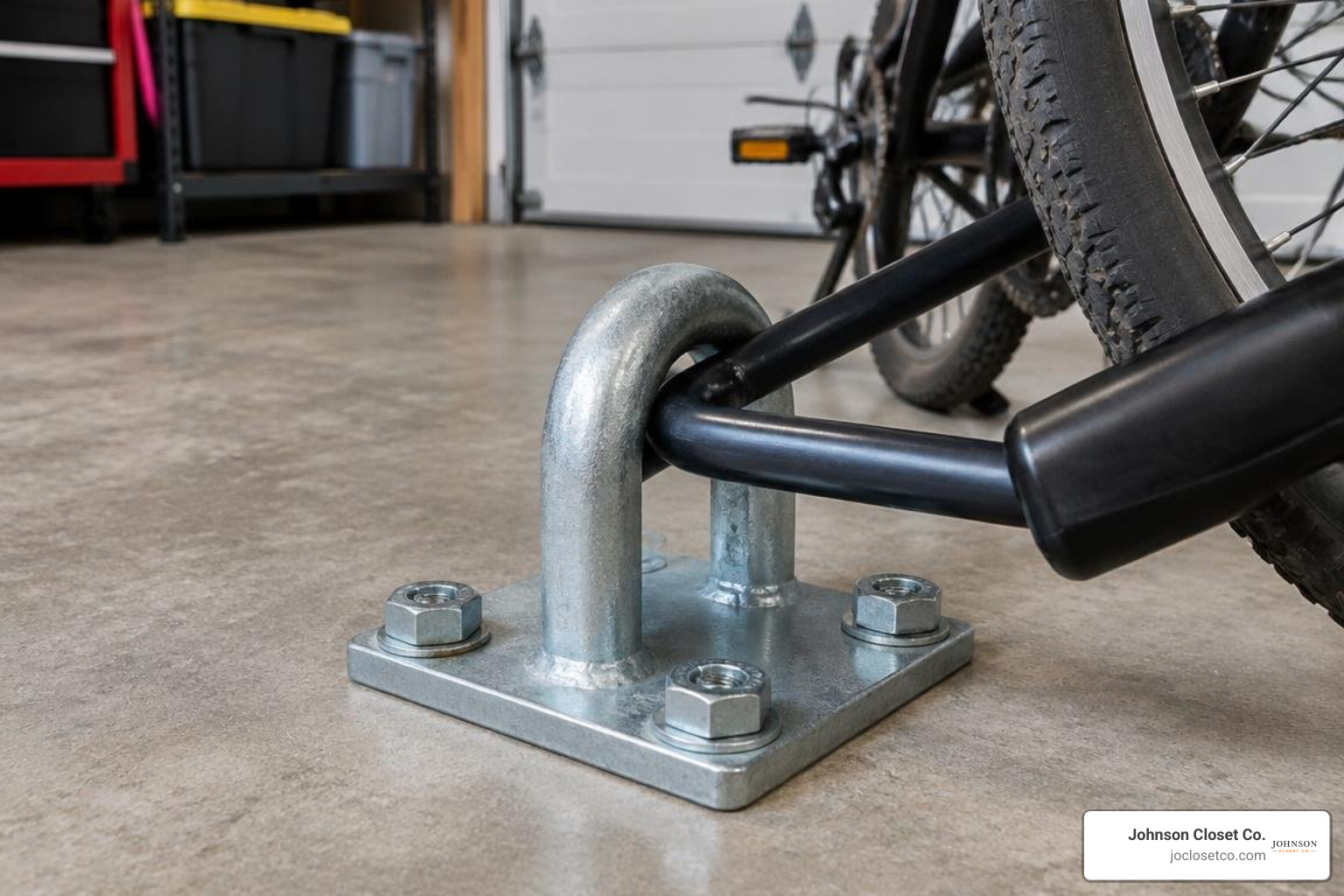
For rock-solid stability, locking anchors and ground lockers must be bolted directly into a flat concrete pad using heavy-duty masonry drop-in anchors or tamper-proof shear nuts. When installing on uneven garage slabs, adjustable-height leveling plates must be used to keep doors square and prevent latch-binding over time.
When planning engineered bicycle storage systems garage layouts, factoring in long-term maintenance ensures smooth operation across years of daily use:
- Semi-Annual Lubrication: Apply dry graphite or synthetic PTFE lock lubricant to all mechanical cylinders and moving latch bolts. Never use wet oils like WD-40, which attract garage dust and grit.
- Anchor Bolt Inspection: Check anchor bolt torque annually to ensure foundation bolts have not worked loose from concrete vibrations or heavy garage traffic.
- Firmware and Power Audits: For smart units, perform over-the-air (OTA) firmware updates as released and replace backup battery packs every 2 to 3 years.
Choosing the Right Bike Garage Lock for Your Budget
When evaluating life-cycle return on investment (ROI), looking strictly at upfront purchase price can be misleading:
- Entry-Level Mechanical Anchors ($50 – $200): Lowest initial cost, zero software fees, and practically zero maintenance beyond occasional lubrication. Excellent for individual homeowners on a budget, though providing no remote monitoring.
- Mid-Tier Electronic Keypad Systems ($250 – $600): Moderate upfront cost. Eliminates lost key replacement expenses and allows quick code changes. Requires battery changes every 12–18 months.
- Commercial Smart Lockers & Hubs ($1,500 – $6,000+): Highest capital expenditure, but delivers 10- to 50-year structural life expectancies. Structural SMC lockers deliver low lifetime ownership costs by eliminating physical rekeying, withstanding extreme weather, and supporting shared multi-user operations.
Frequently Asked Questions About Bike Garage Locks
What happens to smart bike garage locks during a power or network outage?
Quality smart access systems are designed with local memory fail-safes. The control unit stores user authorization tables and cryptographic tokens directly on local circuit boards. If your internet connection drops or the cell network goes down, authorized RFID badges, NFC devices, and cached smartphone credentials will still open the lock without delay. For electrical outages, units rely on internal backup batteries or feature external physical key overrides and 9V auxiliary battery jumper terminals.
How do certified bike garage locks resist tampering and angle-grinder attacks?
Certified locks undergo rigorous testing by independent agencies such as SKG-IKOB (under standards like KE 470) and Sold Secure. These certifications require the locking mechanism, strike plates, and housing to resist sustained attacks with crowbars, cold chisels, heavy bolt cutters, and cordless rotary angle grinders for specified test durations. Manufacturers achieve this resistance by incorporating thick, case-hardened steel alloys, free-spinning cylinder plates that prevent drill bits from biting, and multi-point deadbolts that distribute pry forces across multiple structural frame joints.
Can existing garage doors or bike rooms be retrofitted with smart electronic locks?
Yes. Modular smart control units can retrofit standard doors, sliding gates, and custom bike cabinets into fully managed access zones in just a few hours. These units wire directly into existing electric strikes, electromagnetic locks, or motorized garage door openers. Once wired, the control unit connects to your management app or local network, eliminating physical keys while maintaining the original door structure.
Conclusion
Securing your bicycles inside a home garage or shared facility requires more than a simple padlock hanging on an open wall. High-value road bikes, gravel rigs, and heavy e-bikes demand a layered security strategy combining structural concrete anchors, certified tamper-resistant locking mechanisms, and modern access control.
At Johnson Closet Co., we help homeowners throughout Phoenix, Scottsdale, Gilbert, Chandler, Mesa, and Tempe transform chaotic garages into highly secure, custom-engineered storage spaces. By combining precision-manufactured CNC cabinetry with solid anchoring points, you can safeguard your equipment while keeping your garage clean, organized, and accessible.
To take the next step in organizing and protecting your cycling investments, explore our guide on comprehensive garage cycle storage planning and build a setup that gives you absolute peace of mind.