
Choose Closet Shelves That Fit Your Space and Storage Needs
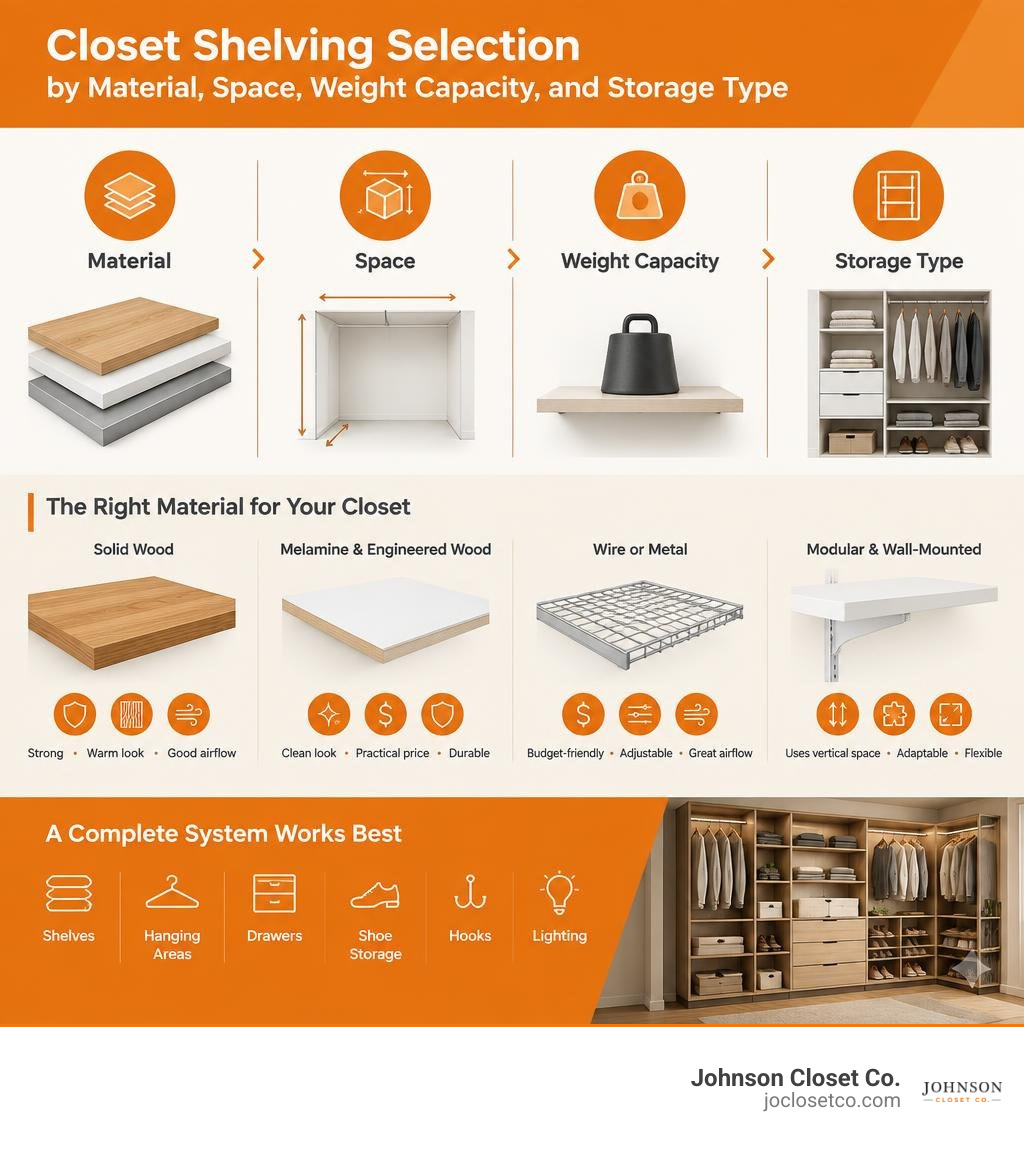
The best closet shelves match what you store, the size and shape of your closet, and the weight they must carry. Start by measuring the width, depth, and height of the space, then choose a material and system that fits your priorities:
- Solid wood offers strength, a warm finished look, and good airflow in ventilated designs.
- Melamine and other engineered wood provide a clean, built-in appearance at a practical price.
- Wire or metal shelving is budget-friendly, adjustable, and useful where airflow matters.
- Modular towers and wall-mounted systems make better use of vertical space and can adapt as your storage needs change.
A well-planned system combines shelves with hanging areas, drawers, shoe storage, hooks, and lighting. It also accounts for shelf spans, bracket placement, and secure wall anchoring, especially for tall towers and heavily loaded shelves.
The goal is not to fill every inch with shelving. It is to create easy-to-reach places for the clothes, shoes, and everyday items you actually use, while leaving enough flexibility for seasonal changes and future needs.
I’m Chris Johnson, owner and president of Johnson Closet Co. After more than 30 years in custom storage design and installation, I have helped homeowners make closet shelves work harder in spaces of every size. In this guide, I’ll break down the materials, layouts, safety details, and accessories that lead to a closet that stays useful long after installation.
Comparing the Primary Materials for Closet Shelves
Selecting the right building blocks for your wardrobe begins with understanding how different core substrates behave over time under load and exposure. Every material carries distinct advantages regarding structural capacity, resistance to bowing, visual appeal, and maintenance demands.
| Material | Typical Load Capacity (Per Linear Foot) | Durability & Scratch Resistance | Best Room Applications | Maintenance Level | Relative Price Point |
|---|---|---|---|---|---|
| Solid Hardwood / Softwood | 25 – 40 lbs | High (can be sanded, refinished) | Master walk-ins, boutique wardrobes, luxury suites | Low to Moderate (wood conditioning) | High |
| Thermally Fused Melamine (TFM) | 30 – 50 lbs (system-supported) | Very High (impact, moisture, scratch-resistant) | Walk-ins, reach-in bedrooms, pantries, kids' rooms | Extremely Low (wipe clean with damp cloth) | Moderate |
| Ventilated Epoxy Wire | 15 – 25 lbs | Moderate (coating can chip under metal friction) | Linen closets, laundry spaces, utility areas, rental units | Low | Budget-Friendly |
| Heavy-Duty Powder-Coated Steel | 40 – 75+ lbs | High (resists warping, heavy tool/equipment wear) | Garages, utility zones, mudrooms, heavy storage | Low | Moderate to High |
Solid Wood vs. Engineered Wood Closet Shelves
Solid timber remains a timeless standard for luxury wardrobe cabinetry. Milled from real pine, maple, oak, or cedar, solid boards feature continuous grain patterns and exceptional rigidity across extended spans. Slatted hardwood shelves enhance ventilation, allowing fabrics to breathe naturally while infusing closets with organic aroma and aesthetic warmth. However, solid wood expands and contracts across climate cycles, requiring precise bracket fastening and finishing to prevent cupping or twisting.
Thermally fused melamine over industrial-grade engineered wood provides unmatched stability, structural uniform density, and clean maintenance. Modern engineered boards eliminate internal grain flaws, preventing knots from creating structural weak points. When fabricated using computer-driven machinery, precision-milled panels accept edge banding that permanently seals the core against humidity and scuffs. When building tailored storage suites, choosing a custom shelf board cut to size guarantees exact wall-to-wall fits without awkward gaps where clothing or belts could slip through.
Ventilated Metal Wire vs. Heavy-Duty Steel
Epoxy-coated wire shelving is an accessible, functional option that serves utility-first areas exceptionally well. Wire grids provide continuous air movement, which keeps bed linens, guest towels, and stored athletic gear fresh while deterring dust buildup. In narrow reach-in niches or small utility closets, a slim profile like 10 inch deep wire closet shelving maximizes wall real estate without crowding narrow door openings.
Heavy-duty powder-coated steel modular assemblies combine expandable framing with steel construction. These structures resist the sagging often seen with lower-grade wire when holding heavy winter parkas, tool sets, or dense denim stacks.
System Configurations: Modular Towers, Wall-Mounted, and Built-Ins
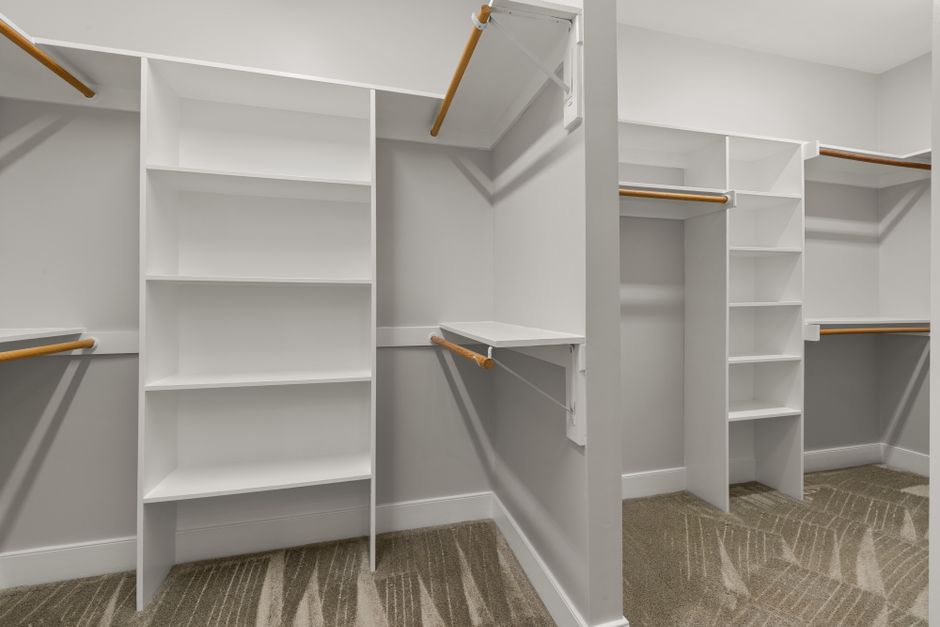
A functional closet is shaped by how its structural framework connects to the surrounding room. System architecture ranges from hanging suspension networks to floor-anchored towers and built-in custom furniture.
Wall-Mounted Rail Systems vs. Floor-Standing Units
Suspension systems utilize a horizontal steel top rail secured directly into wall framing studs. Vertical standards hang downward from this top track, holding movable brackets that support rods and shelves. Suspending cabinetry off the floor leaves room underneath for luggage, laundry hampers, or robotic floor cleaners, and eliminates the need to cut around floor baseboards. Discover the options of versatile closet shelving to discover how top-hung systems preserve valuable square footage.
Floor-standing cabinetry units, by contrast, distribute their primary structural weight straight into the subfloor. These systems offer the robust, permanent feel of architectural built-ins, serving as an ideal foundation for full-extension drawers, hidden tilt-out hampers, and heavy jewelry islands.
Integrated Drawers and Dedicated Towers
Vertical towers organize closets by separating folded garments, footwear, and hanging zones into tidy segments. Modular configurations with drawer stacks provide both concealed drawer space and open shelving within a compact footprint.
For smaller spaces or nursery closets, incorporating a streamlined 3 shelf closet organizer keeps daily folded items at an easy-to-reach height without crowding the room. Pre-drilled interior system holes allow you to shift shelving heights effortlessly whenever seasonal wardrobe layers change.
Planning Dimensions, Weight Capacities, and Space Layouts
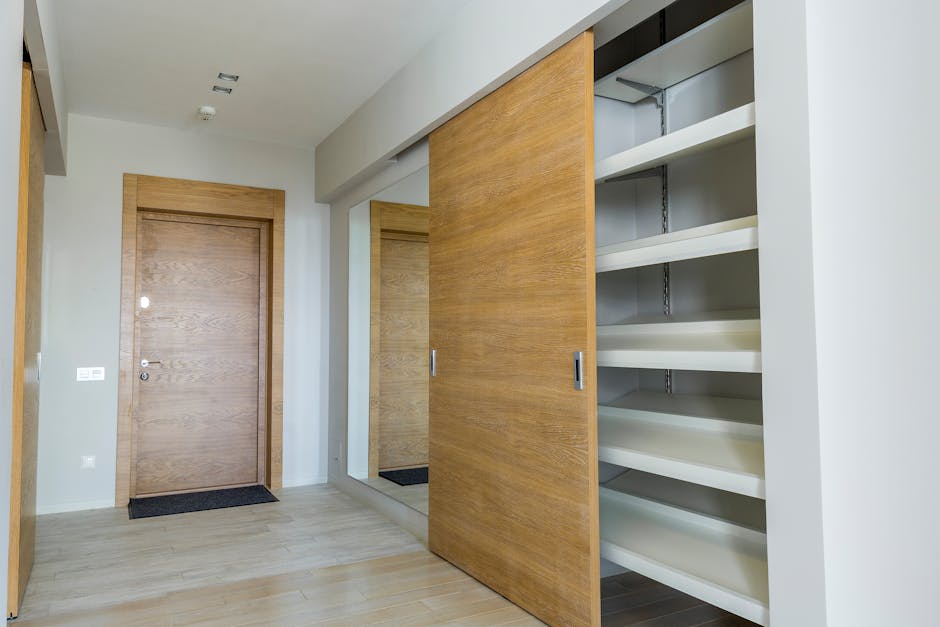
A long-lasting closet layout balances proper horizontal clearance, human reach ergonomics, and strong vertical load transfer. Careful planning avoids common problems like jammed garment hangers, crushed shoes, and bowed center panels.
Determining Depth, Span, and Load Requirements
Standard shelf depth varies based on the garments you plan to store:
- 12-inch shelves suit standard shoe pairs, baseball hats, and folded lightweight T-shirts.
- 14 to 16-inch shelves serve as the industry standard for folded sweaters, jeans, and storage bins.
- 20 to 24-inch shelves accommodate bulky blankets, luggage, and large bedding sets.
Shelf spans must align with weight guidelines to prevent permanent sagging. A standard 3/4-inch melamine or solid wood shelf should rarely span beyond 32 to 36 inches without an intermediate center vertical support or reinforced wall bracket. When planning wider wall-to-wall spans, such as an unbroken 5 ft closet shelf, you must install heavy-duty angle supports anchored securely into studs across the run. For larger rooms, our team crafts tailored layouts for a master closet layout that balances full-length hanging zones with dedicated folding counters.
Maximizing Small Spaces with Adjustable Closet Shelves
Small reach-in closets gain substantial usable capacity when vertical storage zones are mapped to match specific clothing lengths. Rather than settling for a single builder-grade rod, dividing a 6-foot wall into a double-hang configuration (two rods hung at 40 and 80 inches) doubles hanging capacity.
For reach-in bedrooms or compact hallway niches, installing a 36 inch closet organizer introduces a balanced vertical column for shoes and knitwear while leaving space on the sides for hanging garments. Utilizing adjustable solutions like closet shelving with movable shelf pins allows you to shift shelf heights up or down easily, preventing dead space between stacks of folded clothes. Applying thoughtful strategic closet design ensures corners remain accessible via wrap-around curved shelves or L-shaped connectors rather than turning into forgotten, cluttered voids.
Installation, Wall Safety, and Ongoing Maintenance
A great closet system is only as dependable as the hardware securing it to the wall. Proper structural mounting protects your family and keeps heavily loaded shelves level and secure for years to come.
DIY Assembly vs. Professional Installation
Installing a basic kit yourself can be a manageable weekend project if you have basic woodworking tools, a 4-foot level, a stud finder, and reliable masonry/drywall anchors. However, DIY builds can present challenges when walls are out of square, baseboard heights vary, or studs do not align with system pre-drilled brackets.
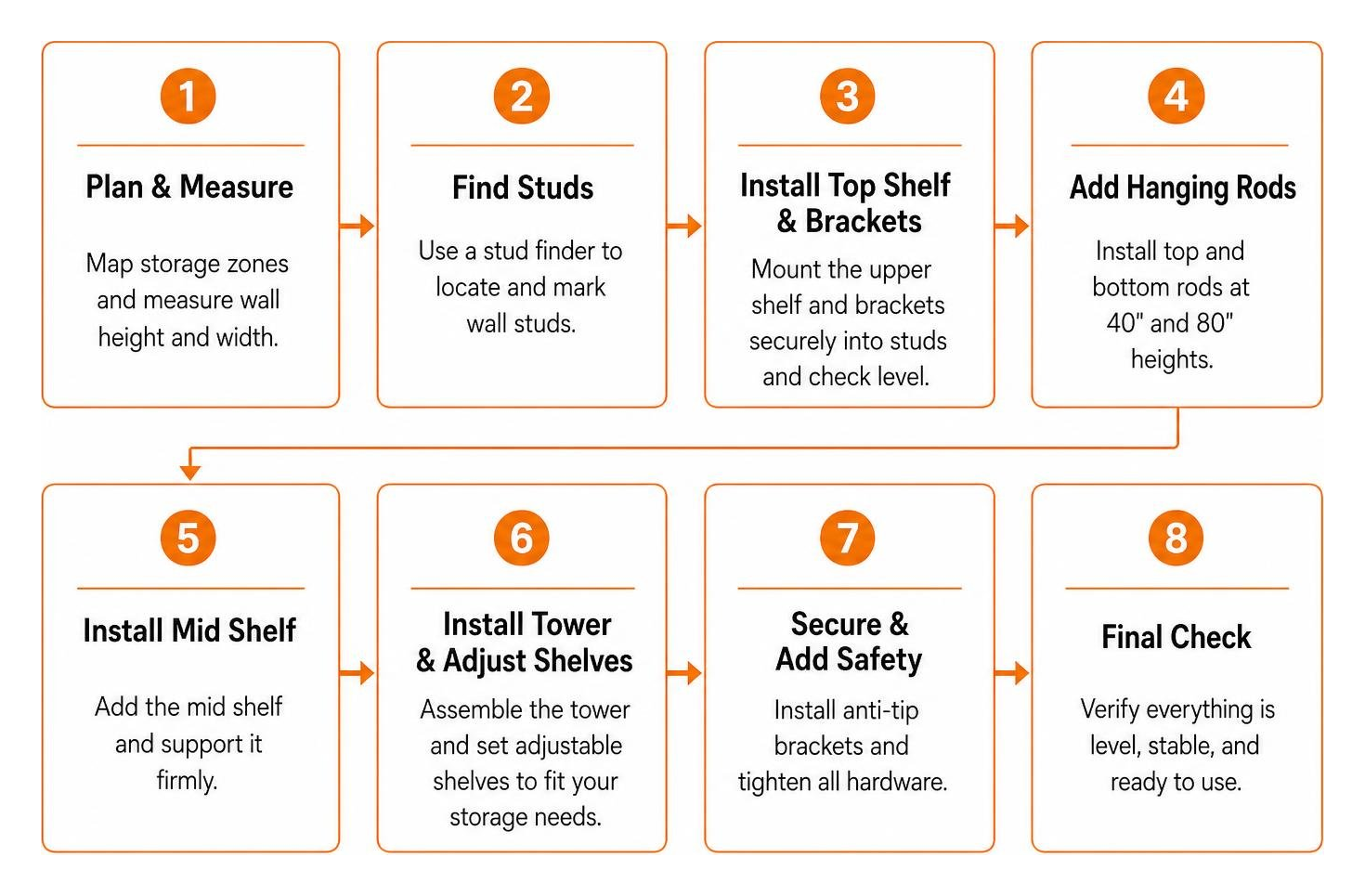
Opting for expert closet system installation ensures that every structural standard connects directly to internal wall studs. Heavy towers should always include anti-tip brackets rated for upwards of 300 to 400 pounds. This is especially vital in homes with energetic children or curious pets who might climb bottom shelves.
Lighting, Accessories, and Long-Term Organization
Lighting turns an ordinary dark closet into an inviting dressing boutique. Low-voltage, warm LED ribbon channels (2700K to 3000K) routed directly into the underside of shelving provide clean light without heat damage to delicate fabrics. Adding motion sensors illuminates the space hands-free the moment the door opens.
Complete your system with dedicated organizational hardware:
- Pull-out valet rods simplify assembling tomorrow's work outfit or holding dry cleaning.
- Angled shoe shelves with polished chrome heel rails keep designer footwear visible and tidy.
- Felt-lined drawer inserts prevent delicate watches, sunglasses, and jewelry from tangling or scratching.
- Belt and tie racks store accessories flat, saving shelf space for bulkier folded knits.
A closet stays functional when supported by sensible storage habits. Committing to a simple routine closet organization cadence—such as rotating out-of-season garments to upper bins twice a year—keeps your primary shelving dedicated to the items you wear most.
Frequently Asked Questions About Closet Shelving
How much weight can standard closet shelves support safely?
Weight ratings depend on material density, bracket spacing, and how the system attaches to the wall:
- Standard 1/2-inch to 3/4-inch melamine boards resting on pins spaced 24 to 32 inches apart support approximately 30 to 50 pounds per linear foot.
- 100% solid timber planks with steel angle brackets anchored directly into studs reliably carry 25 to 40 pounds per linear foot.
- Commercial-grade powder-coated steel modular assemblies can bear up to 75 pounds per linear foot.
- Standard epoxy wire shelving attached with drywall expansion plugs generally handles 15 to 25 pounds per foot.
Always locate internal wall studs when hanging structural top tracks to prevent drywall tear-out.
What shelf depth is best for folded clothes versus shoes?
- 12 inches: Ideal for women's shoes, men's athletic sneakers, hats, and small clutches.
- 14 inches: The universal standard for sweaters, button-down shirts, and trousers. It allows folded garments to sit cleanly without hanging over the front edge.
- 16 inches: Best for thick winter sweaters, large storage bins, and larger footwear.
- 20 to 24 inches: Recommended for upper utility shelves storing extra comforters, sleeping bags, and rolling luggage.
How do you prevent closet shelves from sagging over time?
To avoid sagging, keep spans within recommended limits for the material:
- Particle board or melamine: Do not exceed a 30 to 32-inch unsupported span.
- Plywood or solid wood: Keep spans under 36 to 42 inches without an intermediate center brace.
- Wide spans: For spans of 48 inches or more, add center angle brackets, install vertical divider panels, or attach a solid front hardwood stiffener rail along the bottom edge of the shelf.
Conclusion
Upgrading your closet from cluttered chaos to an organized system transforms your morning routine. Whether you choose the natural warmth of solid timber, the adaptable strength of industrial melamine, or the airflow of ventilated wire, matching materials and dimensions to your daily habits is the foundation of lasting organization.
At Jo Closet Co., we manufacture custom storage systems using in-house CNC equipment to guarantee an exact fit for every closet shape. We proudly serve homeowners throughout the Phoenix Valley, Scottsdale, Gilbert, Chandler, Mesa, and Tempe, Arizona. If you're ready to make the most of your space with durable, custom cabinetry, explore deep closet shelf solutions and schedule your personalized design consultation with us today.