
Closet Organizers That Make Your Space Work Better
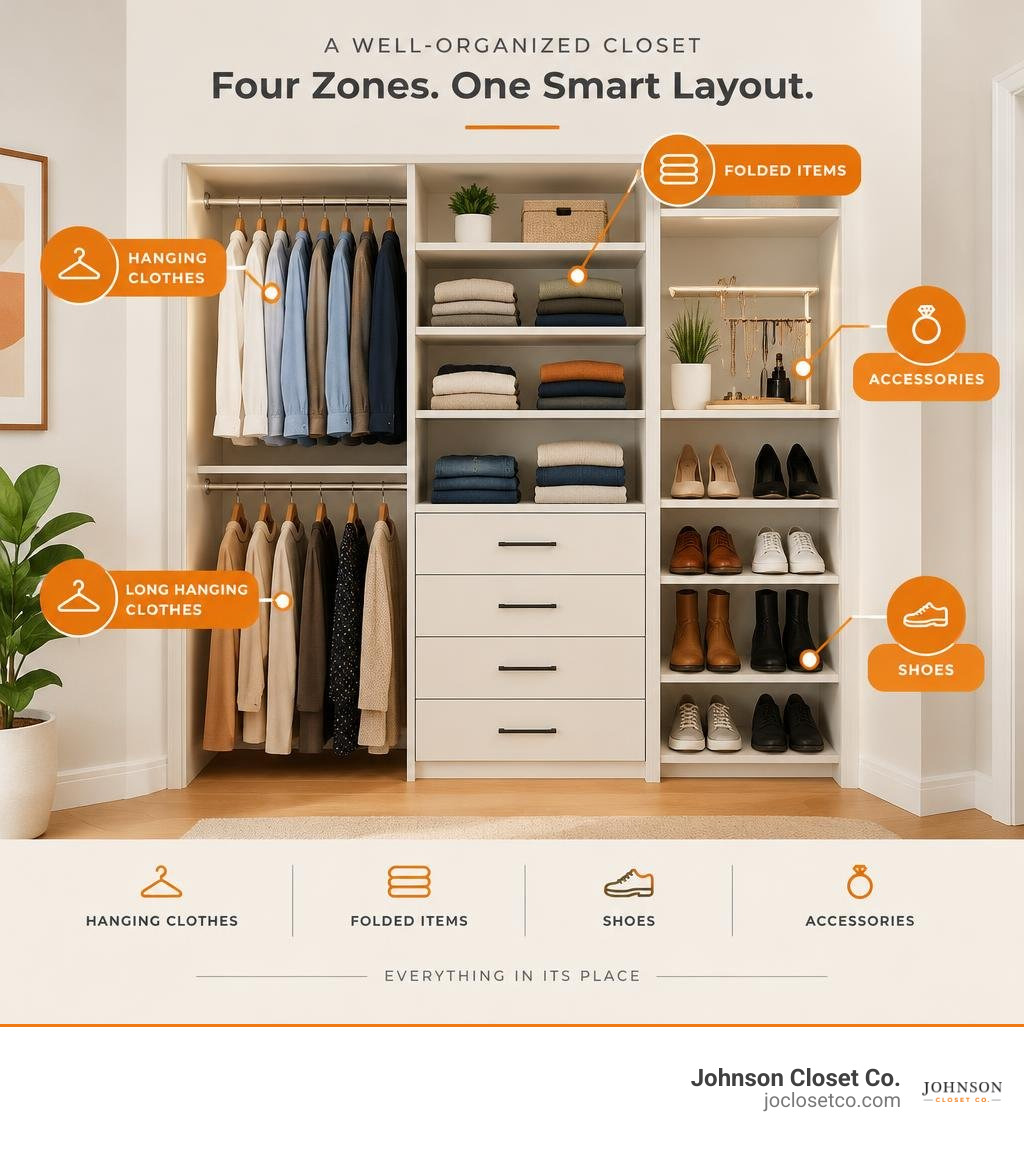
The best closet organizers give each item a place without making the closet harder to use. Start by measuring your closet, then plan space for short and long hanging clothes, folded items, shoes, and accessories. Use shelves or drawers for items that pile up, and keep the things you reach for most at an easy height.
A small reach-in closet may need more vertical storage. A walk-in closet may benefit from separate zones for hanging, folding, and shoes. In either space, the right layout matters more than adding more shelves.
I’m Chris Johnson, owner of Johnson Closet Co. I’ve worked with closet organizers for more than 30 years, designing storage around how people use their space every day.
Selecting the Best Closet Organizers for Your Space
Every functional wardrobe starts with understanding the structural foundation of your space. Choosing the right system depends on whether you rent or own, your budget, the weight of your wardrobe, and your architectural layout. Applying smart closet organization strategies allows you to turn cramped reach-in niches and sprawling walk-ins into streamlined storage zones.
| System Type | Primary Material | Average Weight Capacity | Installation Style | Best Suited For |
|---|---|---|---|---|
| Ventilated Wire Shelving | Vinyl/Epoxy-Coated Steel | 50–100 lbs / linear foot | Wall-hung track or direct-mount | Rental units, utility closets, humid spaces, budget reach-ins |
| Modular Laminate Kits | Particleboard or Melamine | 50–75 lbs / shelf | Wall-mounted track or floor rest | DIY homeowners, standard reach-ins, expandable wardrobes |
| Freestanding Garment Racks | Tubular Steel / Engineered Wood | 100–400 lbs total capacity | No mounting (freestanding) | Temporary storage, open lofts, renters avoiding drywall holes |
| Custom Built-In Cabinetry | Commercial-Grade Thermofused Laminate / Solid Core | 100–150+ lbs / shelf | Mechanical wall-stud and floor anchoring | Permanent luxury, odd alcoves, walk-ins, maximum home value |
Modular and Wall-Mounted Closet Organizers
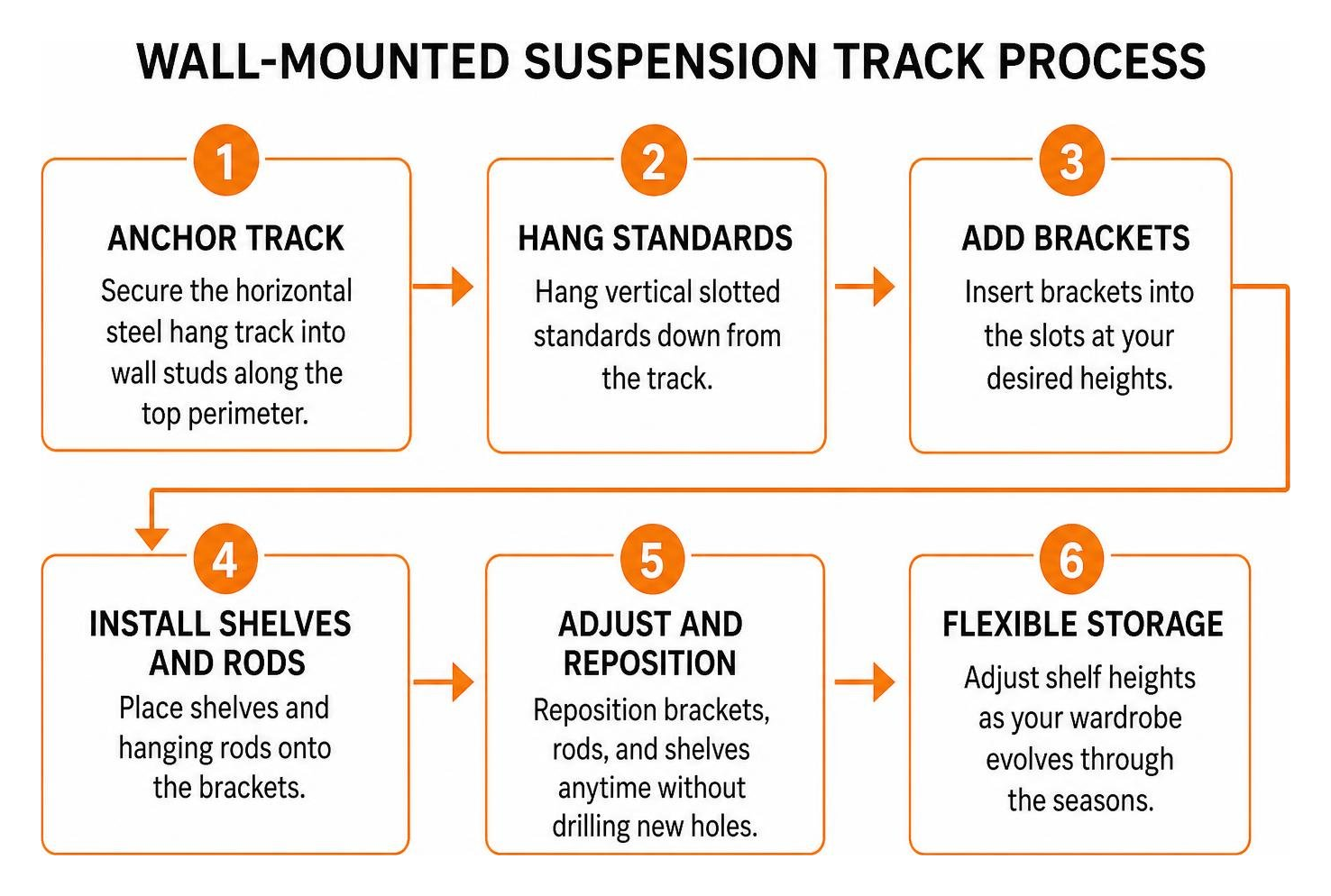
Wall-mounted systems are a popular solution for homeowners seeking adjustability. These systems rely on a horizontal steel hang track anchored into wall studs along the top perimeter of the closet. Vertical slotted standards hang down from this rail, allowing you to reposition brackets, rods, and shelves without drilling additional holes.
Deploying flexible shelving systems for closets gives you complete control over shelf heights as your wardrobe evolves through the seasons. Top-tier modular systems feature sturdy wire or solid shelves that hold up to 100 pounds per linear foot. When shopping for modular options, review verified consumer testing regarding shelf drop tests, stain resistance against oils and cosmetics, and track alignment complexity.
Freestanding Racks and Built-In Storage Units
Freestanding racks offer flexible storage without requiring drywall anchors or power tools. Heavy-duty expandable steel racks feature adjustable-height shelves holding up to 100 pounds each, making them practical for open lofts or guest bedrooms. However, freestanding units consume floor space and lack the integrated, seamless appearance of built-in furniture.
For permanent stability and polished design, built-in organizers anchor directly to the wall framework. Units such as 36-inch closet organizer layouts provide an ideal central tower footprint for folded apparel and drawers. Here at Jo Closet Co., our in-house precision manufacturing uses advanced CNC equipment to craft exact-fit components tailored directly to your home's unique dimensions across the Phoenix Valley.
Key Features and Materials for Long-Term Durability

Investing in wardrobe storage requires close attention to structural materials. Off-the-shelf retail systems often rely on lightweight particleboard covered in paper foil, which can sag, bow, or delaminate under heavy weight and heat.
Opting for durable closet shelving options made from commercial-grade thermofused laminate (TFL) or epoxy-coated steel ensures your storage withstands decades of daily use. Thick 2mm PVC edge banding seals shelf profiles against impacts and chipping, preventing garments from snagging on rough edges. In our hot, arid Arizona climate—spanning Scottsdale, Gilbert, Chandler, Mesa, and Tempe—commercial-grade solid-core materials prevent the warping and structural degradation that often affect thin retail laminates.
Weight Capacity, Adjustability, and Hardware Quality
Weight ratings determine how well your closet holds up under heavy loads:
- Standard Wire Shelving: Rated between 30 and 50 pounds per foot for direct-mount brackets, or up to 100 pounds per foot when using heavy-duty steel track supports.
- Solid Laminate Shelving: Quality 3/4-inch commercial shelves hold between 75 and 120 pounds per span when secured with hardened steel shelf pins.
- Hang Rods: Thick-walled steel oval or round rods support up to 45 pounds per linear foot without sagging, easily holding heavy winter coats and denim.
For compact spaces, 3-shelf closet organizer configurations provide dedicated zones for shoes and folded knits while keeping installation simple. Always check that wall-hung uprights use heavy-duty toggle bolts or structural wood screws driven directly into wall studs.
Layout Customization: Hanging Rods, Drawers, and Shelves
A well-planned closet layout eliminates dead zones through balanced storage options:
- Double-Hang Sections: Stack two rods vertically (typically at 40 inches and 80 inches from the floor) for shirts, skirts, and folded trousers to instantly double your hanging capacity.
- Long-Hang Sections: Dedicate a 60- to 66-inch vertical drop for full-length dresses, jumpsuits, and trench coats.
- Soft-Close Drawer Banks: Conceal personal items, athletic wear, and socks while keeping folded clothes dust-free.
- Dedicated Corner Units: Incorporate curved corner rods or 30-inch by 30-inch corner shelves to keep hard-to-reach angles functional.
Explore creative closet shelving design ideas to combine open shelving displays with functional valet rods for staging tomorrow's outfit.
Maximizing Small Closets and Awkward Spaces
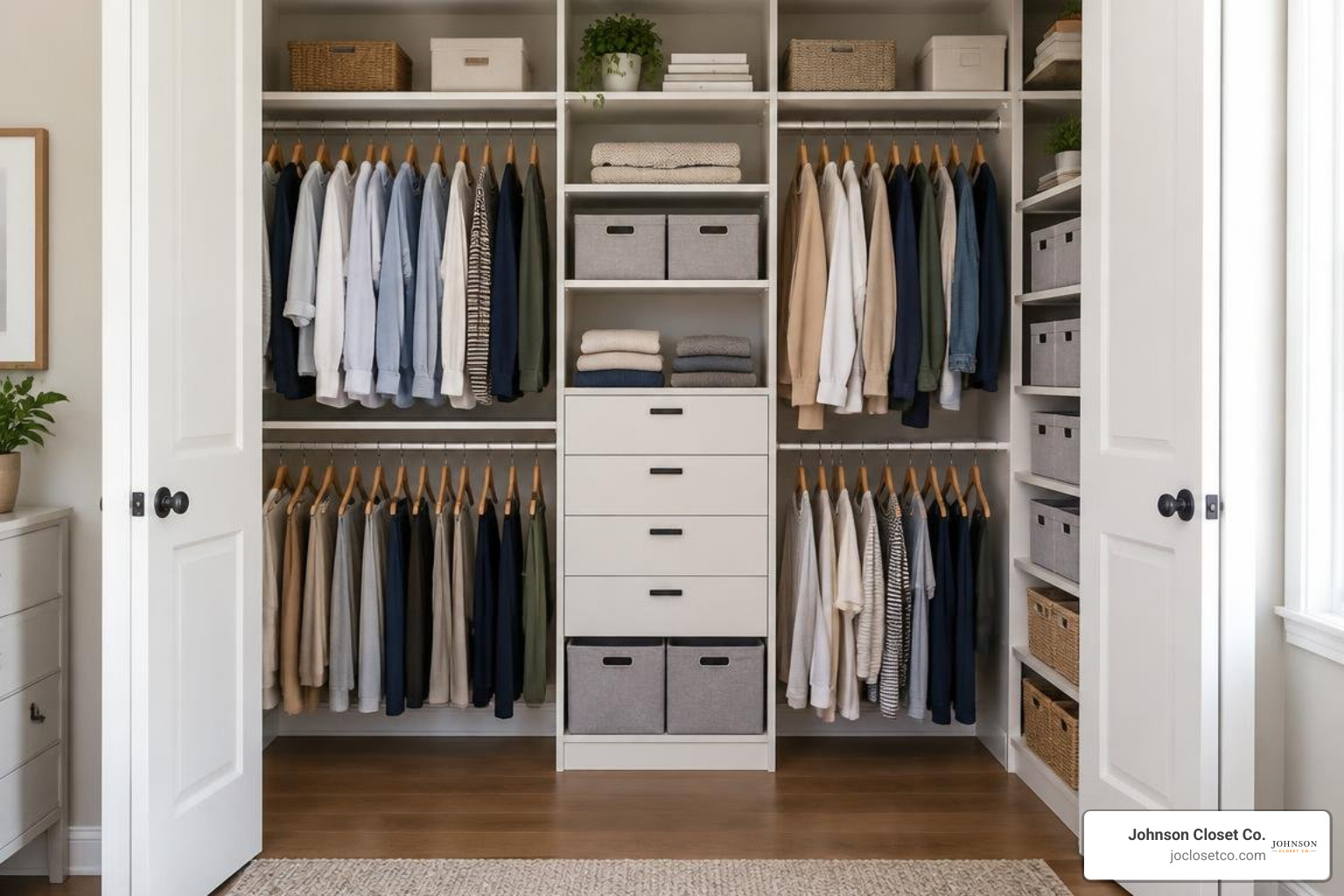
Reach-in closets and awkward architectural nooks require strategic space planning. Rather than letting upper shelf space sit empty, run your vertical towers up toward the ceiling. Integrating whole-home storage solutions across entryways, bedrooms, and utility closets ensures everyday essentials stay organized without cluttering your living areas.
Specialized Accessories and Closet Organizers for Clutter
Small accessory upgrades deliver significant functional improvements to any wardrobe:
- Ultra-Slim Velvet Hangers: Replace bulky plastic or wooden hangers with thin, non-slip velvet profiles to save up to 40% of horizontal rod space.
- Over-the-Door Organizers: Utilize door backs with tiered racks for footwear, scarves, and accessories.
- Fabric and Acrylic Bins: Organize drawers and open shelves using fabric modular boxes or clear bins to keep loose items neat.
- Hanging Accessory Storage: Double-sided organizers featuring clear pockets keep jewelry, belts, and ties tangle-free and easy to see.
- Integrated LED Puck or Strip Lighting: Battery-operated or hardwired motion-sensor lighting illuminates dark corners for effortless morning selections.
Space-Saving Hacks for Odd Angles and Narrow Alcoves
When working with sloped ceilings or narrow reach-in returns:
- Tension Rod Storage Shelves: In narrow rental nooks, position three heavy-duty tension rods horizontally (spaced across a 12-inch depth) to create an instant lightweight shelf for fabric storage boxes.
- Multi-Tier Swing-Arm Hangers: Hang up to five pairs of pants or skirts on a single vertical hook to maximize clearance.
- Under-Bed Rolling Storage: Store seasonal blankets and heavy apparel in low-profile zippered cases under the bed to free up valuable closet shelf space.
Step-by-Step Installation and Cost Guide
A successful DIY build requires the right tools: a digital stud finder, a 48-inch bubble level, a cordless drill/driver, and safety glasses. Follow our step-by-step closet system installation guide or our comprehensive DIY closet shelves guide for detailed layout and installation techniques.
Budget Tiers and Cost Breakdown
- Budget Tier ($25 – $100): Focuses on basic organization accessories, including velvet hanger bundles, over-the-door shoe organizers, fabric drawer inserts, and single cut-to-fit wire shelves.
- Mid-Range DIY Modular Kits ($150 – $800): Includes wall-mounted track systems, expandable wire configurations, and flat-pack laminate tower kits spanning 4 to 8 feet.
- Premium Custom Systems ($1,500 – $5,000+): Features floor-mounted, commercial-grade custom cabinetry built with CNC precision, soft-close hardware, integrated LED lighting channels, and professional in-home installation.
Common Installation Mistakes to Avoid
- Anchoring Exclusively into Drywall: Heavy wardrobes will pull hollow-wall anchors out over time. Always secure the main support track directly into solid wood wall studs.
- Failing to Level the Top Hang Rail: If the top horizontal track is off-level by even an eighth of an inch, vertical uprights and shelves will bind, resulting in crooked shelving and sticking drawers.
- Overlooking Baseboards: Floor-standing modular towers must sit flush against the back drywall. Notch the bottom rear of the unit or remove baseboard sections for a secure fit.
- Ignoring Depth Clearances: Standard hanger clearance requires at least 22 to 24 inches of total interior closet depth so clothes hang naturally without pressing against the door.
Frequently Asked Questions About Wardrobe Storage Systems
How do I choose between wall-mounted and floor-mounted systems?
Choose a wall-mounted track system if you want adjustable shelf heights, simple DIY installation, and clear floor space underneath for easy vacuuming. Opt for a floor-mounted system if you want a sturdy, high-end built-in look with base trim, deep drawers, and heavy-duty load capacities.
How much weight can a standard closet organizer system hold?
High-grade steel track systems hold up to 100 pounds per linear foot when properly anchored to wall studs. Free-standing and modular laminate shelves typically support 50 to 75 pounds per individual shelf, while commercial-grade custom units support over 120 pounds per span.
What is the most space-efficient way to organize shoes and accessories?
Use angled shoe shelves with front lip stops, over-the-door shoe organizers, or stackable clear cubbies to keep footwear off the floor. For accessories, use slim velvet hangers, velvet-lined drawer inserts, and dual-sided clear hanging organizers to protect items while saving space.
Conclusion
A well-planned closet organizer simplifies your morning routine, protects your wardrobe, and maximizes every inch of storage in your home. Whether you need an expandable reach-in organizer or a fully customized luxury walk-in wardrobe, focusing on durable materials and smart layout zoning ensures lasting storage efficiency.
If you are located in Phoenix, Scottsdale, Gilbert, Chandler, Mesa, or Tempe and want an exact-fit wardrobe crafted with CNC precision, explore our custom storage solutions from Jo Closet Co. to schedule your in-home design consultation today.