
The Real Problem with Shelving Systems for Closets (And How to Fix It)IMG
The Real Problem with Shelving Systems for Closets (And How to Fix It)
Shelving systems for closets come in more shapes, sizes, and price points than most homeowners expect. Here is a quick overview of your main options:
| System Type | Best For | Price Range | DIY-Friendly? |
|---|---|---|---|
| Modular kits (wire) | Rentals, tight budgets | $50 - $200 | Yes |
| Modular kits (wood) | Reach-in and walk-in closets | $148 - $500+ | Yes |
| Freestanding units | No-drill setups | $100 - $425 | Yes |
| Custom-built systems | Exact-fit, long-term solution | Varies | No |
The right choice depends on your closet size, your storage needs, and how long you plan to stay in your home.
Open your closet right now. If what you see is a jumbled mess of clothes, shoes you forgot you owned, and shelves that are either too high or too low — you are not alone.
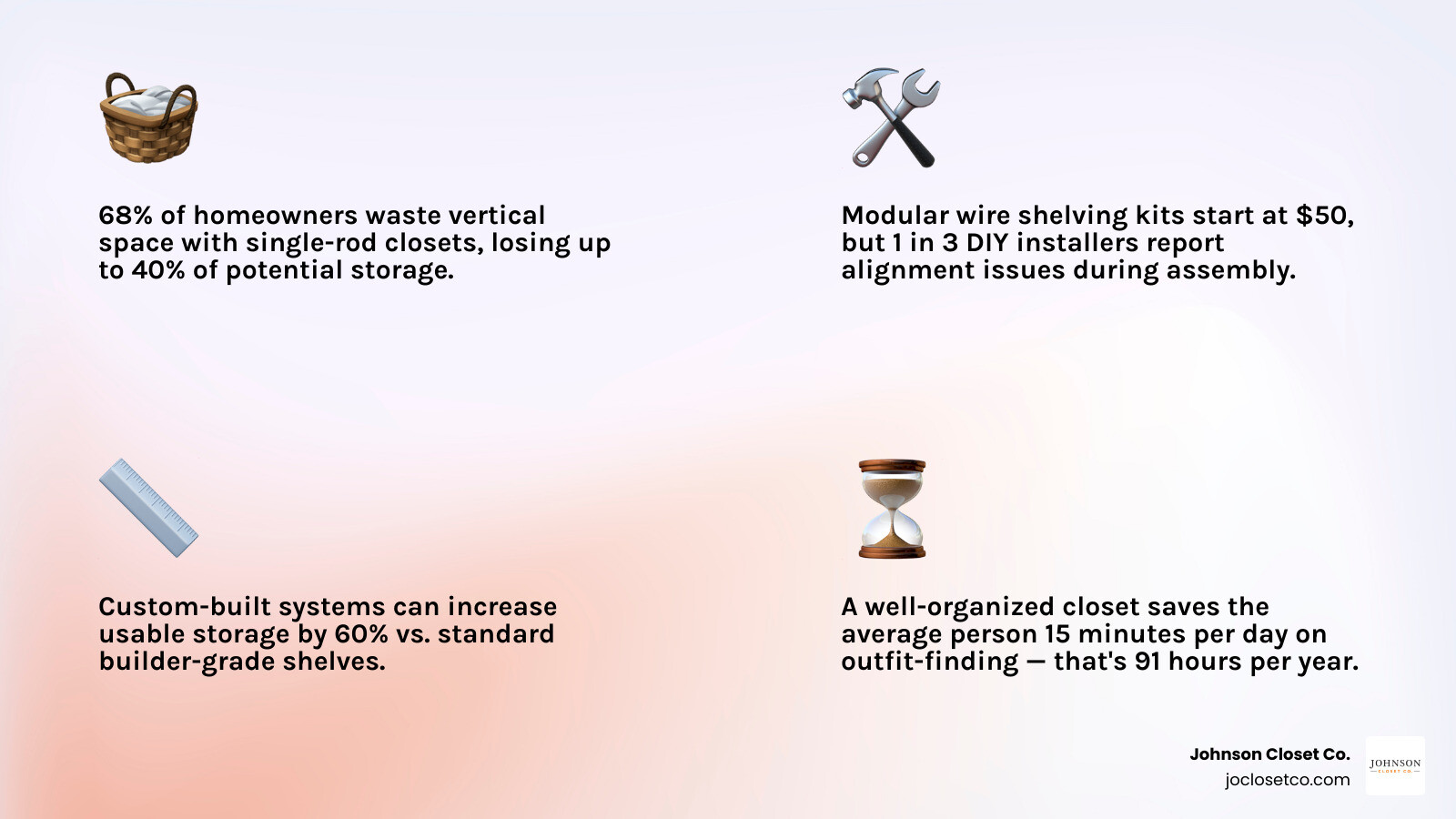
Most homes ship with the bare minimum: a single rod and maybe one shelf. That is it. The result? Wasted vertical space, clothing piled on the floor, and the low-grade daily frustration of never being able to find anything quickly.
The good news is that upgrading your closet storage is one of the most impactful home improvements you can make — and it does not have to cost a fortune or require a contractor.
But choosing the wrong system can mean wobbly shelves, ill-fitting units, or a weekend install that turns into a multi-day ordeal. (One reviewer famously joked that her marriage barely survived installing a complex wood kit.)
This guide walks you through everything — system types, materials, sizing, accessories, and when DIY makes sense versus when a professional fit is worth every penny.
I am Chris Johnson, and at Johnson Closet Co. we help homeowners turn frustrating, underused closets into spaces that actually work — so let us get into it.
Evaluating Different Shelving Systems for Closets
When you begin searching for shelving systems for closets, the sheer volume of options can feel overwhelming. The key to cutting through the noise is understanding how different systems impact your closet organization, overall storage capacity, and design flexibility.
The standard wire rack that came with your house might hold a few coats, but it does not maximize your space. A well-thought-out system utilizes every square inch of vertical and horizontal wall space, turning clutter into order.

Modular and Custom Shelving Systems for Closets
The modular approach is highly popular for DIY enthusiasts. Prepackaged modular kits allow you to mix and match components like towers, rods, and shelves. For instance, standard retail wire kits are priced around $150 and offer an expandable, modular wire setup. If you want something more substantial, wood-based modular systems provide a built-in look with adjustable shelves, clothing rods, and shoe shelves.
Many retail modular options combine heavy-duty metal frames with wooden drawers to offer a semi-custom look on a budget.
However, mass-produced modular kits have a major drawback: they are built to generic "average" dimensions. If your walls are slightly bowed (which they almost always are, especially in older homes across the Phoenix Valley), or if your closet dimensions do not perfectly match the kit's footprint, you will end up with awkward, dusty gaps.
This is where custom configurations shine. At Jo Closet Co., we use in-house precision manufacturing with state-of-the-art CNC equipment. This allows us to craft exact-fit solutions designed specifically for your home's unique walls, ensuring there are no wasted gaps or awkward clearances.
Wall-Mounted vs. Freestanding Shelving Systems for Closets
As you evaluate your layout, you will need to choose how the system is supported:
- Wall-Mounted Systems (Suspension Rails): These systems rely on a single horizontal track mounted high on the wall, secured directly into the studs. Vertical standards hang down from this track, and brackets snap into place to support shelves and rods. This is the foundation of many adjustable track lines. They keep the floor completely clear, making cleaning easy.
- Freestanding Systems (Floor-Mounted Towers): These units stand on the floor and are anchored to the wall at the top for safety. They offer a heavy, premium furniture-like appearance. Modern, open-concept freestanding systems often use sturdy, anodized aluminum vertical posts and lightweight shelves to create a contemporary look.
Deciding between these options depends heavily on your walls. If you are dealing with plaster or metal studs, a floor-mounted system might relieve some of the structural stress. To understand how these different mounting types affect your walls, you can read our guide on closet system installation.
Choosing the Right System for Your Closet Size
Your closet's physical footprint is the ultimate deciding factor in what type of shelving system will work. Trying to cram a massive walk-in wardrobe system into a small reach-in closet will only make the room feel claustrophobic.
Walk-In Closet Layouts
If you are fortunate enough to have a walk-in closet in Scottsdale or Gilbert, you have room to play. Walk-in closets allow for luxurious additions like:
- Island Units: A central drawer unit for jewelry, watches, and folded items.
- Corner Shelves: Custom curved or angled shelves that prevent corner spaces from becoming dead zones.
- Dedicated Dressing Areas: Integrating a bench, full-length mirror, and valet rods.
In large walk-ins, you can easily use deeper shelving units. However, balancing open shelving for display with closed drawers to hide clutter is essential to keeping the space looking like a boutique rather than a warehouse.
Reach-In and Small Closet Solutions
Reach-in closets — typically found in hallways and guest bedrooms — require a highly strategic approach. Every millimeter counts.

To maximize a reach-in:
- Ditch the sliding doors if possible: Double-pass sliding doors block half of your closet at any given time. Consider bi-fold doors or leaving the closet completely open.
- Use a single central tower: Place a shelving tower in the center to hold folded clothes and drawers, with hanging rods extending to the left and right walls.
- Optimize shelf depth: While deep shelves sound great, shallow shelves prevent items from getting lost in the dark back corners. For narrow spaces, some homeowners look into 10 inch deep wire closet shelving as a quick budget fix, though solid, shallow wood shelving offers a much cleaner, snag-free alternative.
Material Selection: Balancing Durability, Style, and Budget
The materials you choose dictate how long your shelving system will last, how much weight it can support, and how it elevates your home’s aesthetic.
Solid Wood and Engineered Wood
Wood is the gold standard for high-end closet design. However, "wood" in the closet industry covers a wide spectrum:
- Solid Wood: Beautiful and incredibly strong, but highly susceptible to warping in shifting climates and very expensive.
- High-Density Melamine & Particleboard: This is what high-quality custom closet builders use. It consists of a dense, engineered wood core wrapped in a durable, easy-to-clean melamine laminate. It resists scratches, never needs painting, and won't warp in the dry Arizona heat.
- Plywood: Strong and lighter than particleboard, but requires edge-banding or painting to look finished.
When designing deep storage, such as 24 inch deep closet shelves for bulky winter blankets or suitcases, engineered wood provides the structural integrity needed to prevent sagging over time.
The Drawbacks of Metal and Wire Systems
While wire shelving is cheap and easy to install, it comes with several daily frustrations:
- The "Wire Indent" Effect: Folded sweaters and linens left on wire shelves will develop unsightly, permanent wire creases.
- The Slip-Through: Small items like perfume bottles, jewelry, or thin heels will tip over or fall right through the gaps.
- Aesthetic Limitations: Wire shelves can look sterile and cheap, detracting from the overall design of your bedroom.
- Dust and Maintenance: Wire racks collect sticky dust in their joints that is incredibly tedious to clean.
Upgrading to solid, flat-surface shelving instantly makes your closet feel cleaner, more organized, and far more luxurious.
How to Measure and Plan Your Closet Layout
Before buying a single shelf or driving a screw into the wall, you must have an accurate plan. Measuring a closet is more complicated than simply running a tape measure from wall to wall once.
Step-by-Step Measuring Guide
Drywall is rarely perfectly square. A closet wall can easily be half an inch wider at the bottom than it is at the ceiling.
Follow this checklist to measure like a pro:
- The Three-Point Width Check: Measure the width of the back wall at three different heights: near the floor, in the middle, and near the ceiling. Always use the smallest of these three measurements when ordering or building shelves. If you use the largest, your shelves won't slide into place.
- Check the Depth: Ensure your closet has enough depth for hanging clothes. Standard hangers require at least 21 inches of depth, though 24 inches is ideal to prevent sleeves from getting caught in the closet doors.
- Locate the Studs: Use a reliable stud finder to mark the location of every wall stud. Your system's weight-bearing standards must be anchored directly into these studs.
- Account for Trim and Obstructions: Don't forget to look for baseboards, light switches, electrical outlets, and air vents that could block drawers or shelving towers.
| Feature | DIY Prepackaged Kits | Jo Closet Co. Custom Systems |
|---|---|---|
| Fit | Generic sizes; often leaves gaps | Exact-fit, CNC precision-machined |
| Material Quality | Thin wire or low-density particleboard | High-density melamine, scratch-resistant |
| Aesthetics | Visible brackets, basic colors | Seamless built-in furniture look |
| Installation | Hours of frustrating manual labor | Professional, stress-free white-glove setup |
| Warranty | Limited retail return window | Lifetime structural peace of mind |
Customizing with Accessories
Once the core shelving is planned, you can customize your layout with specialized accessories:
- Soft-Close Drawers: Perfect for socks, undergarments, and keeping folded clothes out of sight.
- Angled Shoe Racks: Include a small metal lip at the front to display your footwear collection beautifully.
- Valet Rods: A pull-out rod to hang your dry cleaning or plan your outfit for the next morning.
- Jewelry Trays: Velvet-lined drawer inserts to keep necklaces untangled and rings organized.
DIY vs. Professional Closet Installation
Should you tackle this project over the weekend, or call in the professionals? The answer depends on your comfort level with power tools, your budget, and how perfect you want the final product to look.
The DIY Woodworking Route
If you have a garage full of tools and love woodworking, building a custom closet from scratch is incredibly rewarding.
Many homeowners start with standard DIY plans, such as the popular 1x12 Easy to Build and Hang Modular Closet System - Free Plans with Configurator for Custom Sizes | Ana White. This system uses standard 1x12 lumber (which actually measures 11.25 inches deep) and pocket-hole joinery to create simple, budget-friendly shelving towers.
However, DIY woodworking has its limitations:
- Finishing Challenges: Sanding, priming, and painting raw wood to get a smooth, factory-grade cabinet finish takes days of tedious work.
- No Heavy Drawers: A standard 1x12 board depth is too shallow to accommodate standard drawer slides, meaning you are limited to open shelves or fabric bins.
- Time Commitment: What looks like a "one-afternoon project" on social media often turns into several weekends of trips to the hardware store, dealing with warped boards, and correcting out-of-square assemblies.
When to Hire a Professional
If you want a flawless finish, heavy-duty drawer glides, and a system that perfectly contours to your walls without any DIY gaps, hiring a professional is the way to go.
At Jo Closet Co., we eliminate the guesswork. We handle the measuring, the high-precision CNC manufacturing in our local facility, and the clean, quick installation. You don't have to spend your weekend wrestling with wall anchors, leveling heavy towers, or sweeping up sawdust. We design storage systems that are built to last a lifetime, tailored precisely to how you live.
Frequently Asked Questions about Closet Shelving
How much weight can standard closet shelves hold?
Weight capacity depends entirely on the material and how the shelf is supported.
- Standard Modular Wood Systems: Typical retail wood-composite shelves support up to 25 to 30 lbs each, while standard clothing rods support up to 50 lbs.
- Heavy-Duty Metal Systems: High-quality steel or aluminum track systems can support up to 60 to 70 lbs per shelf when properly installed.
- Professional Custom Melamine: When properly anchored to wall studs, our custom 3/4-inch thick melamine shelves can easily support 75+ lbs without bowing. Always ensure span lengths do not exceed 30 inches without a middle support bracket to prevent sagging.
How do I prevent tall shelving units from tipping over?
Safety is paramount, especially if you have children or pets who might try to climb the shelving. Every tall shelving unit or floor-mounted tower must be securely anchored to the wall.
Always use a stud finder to locate wood studs and secure the tower using heavy-duty L-brackets or safety straps. If no stud is available, use high-quality toggle bolts or steel hollow-wall anchors rather than cheap plastic drywall plugs.
Can I adjust my closet shelving system after it is installed?
Yes, if you choose a system designed with adjustability in mind. Look for vertical panels pre-drilled with "32mm system" shelf pin holes. This allows you to easily move shelves up or down as your wardrobe changes (for example, swapping short boot storage for tall winter coats). Track-based wall systems also allow you to snap brackets into different slots along the vertical standards.
Conclusion
Upgrading your closet is more than just an aesthetic improvement; it is a daily sanity saver. Imagine waking up, opening your closet doors, and instantly seeing everything beautifully organized, within arm's reach, and perfectly lit.
Whether you opt for a quick weekend DIY wire kit, try your hand at building a wooden modular system from scratch, or invest in a gorgeous, custom-manufactured closet, taking control of your storage space is always worth the effort.
If you live in the Phoenix Valley — including Scottsdale, Gilbert, Chandler, Mesa, and Tempe — and you are ready to skip the DIY headaches for a flawless, custom-fit storage solution, we are here to help. Schedule a custom design consultation with us today, or explore our Simply Efficient options to find the perfect system for your budget and style. Let us help you build a closet you love coming home to!