
Choose a Garage Bike Storage System That Fits Your Space
Choose a Garage Bike Storage System That Fits Your Space
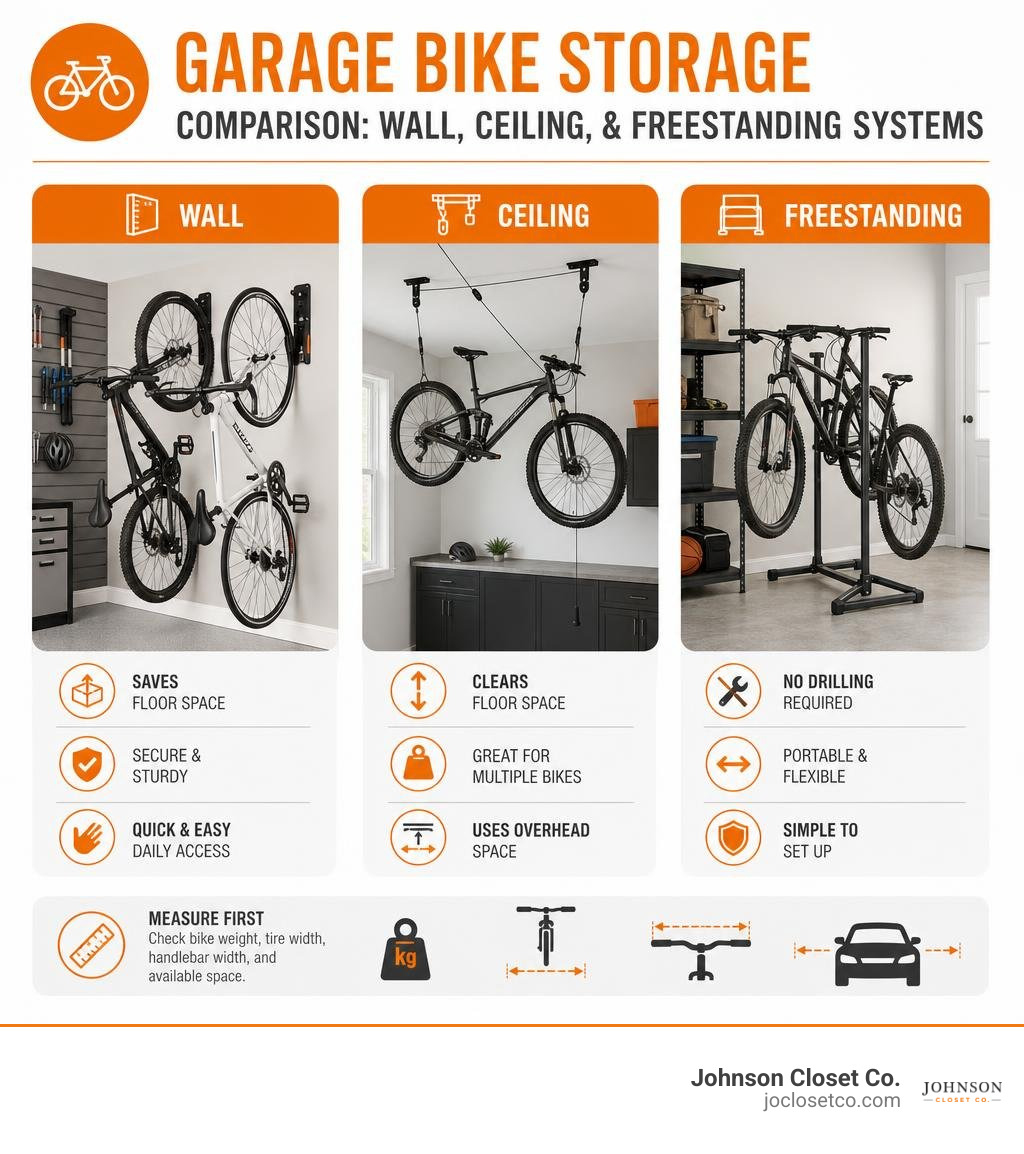
The best bicycle storage systems for a garage match your bike count, bike weight, available wall or ceiling structure, and daily access needs. For most homes, vertical wall racks save the most floor space. Ceiling systems work well when you have enough overhead clearance, while freestanding racks are the simplest choice for renters or garages where drilling is not an option.
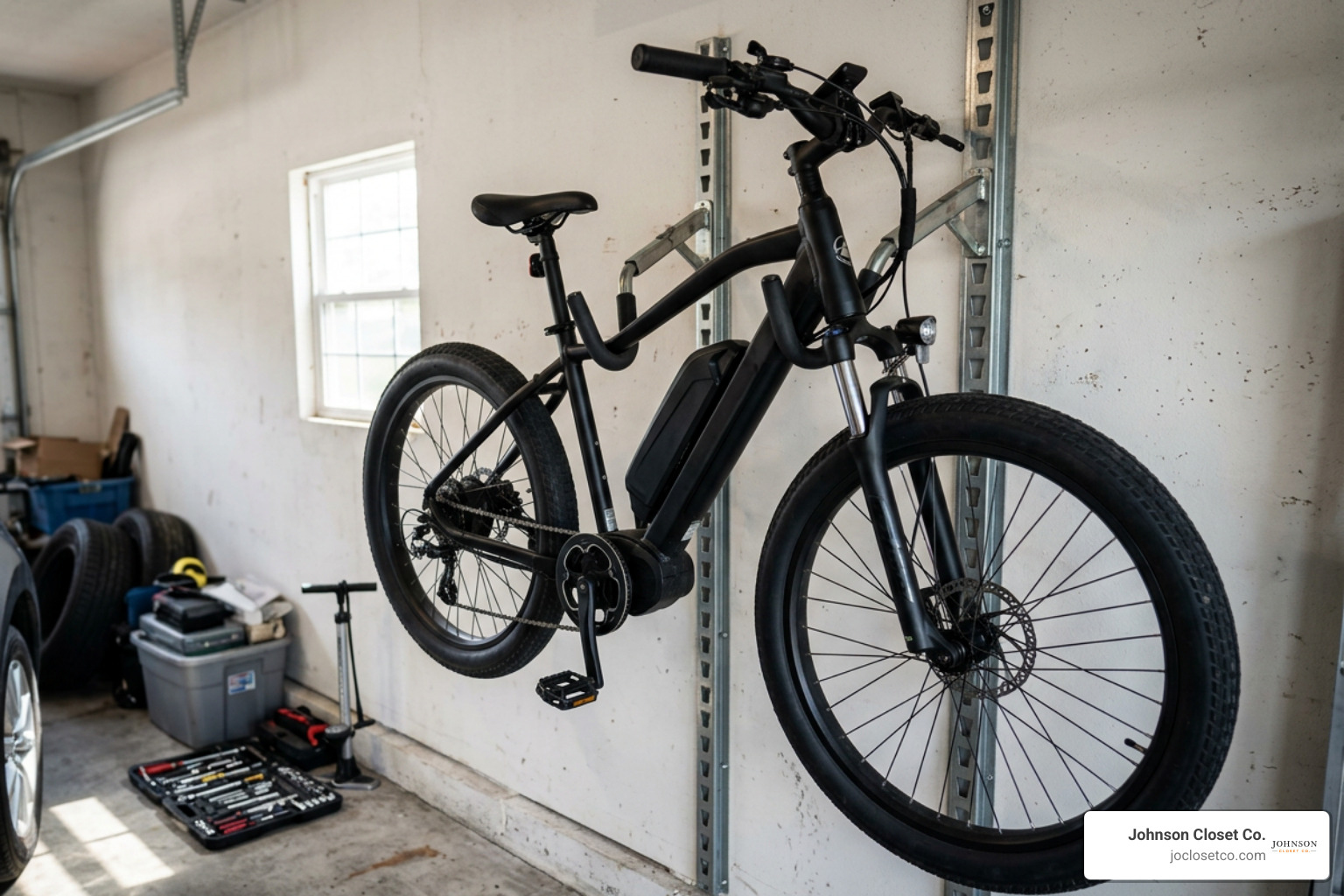
Before buying, measure your bikes' weight, tire width, handlebar width, and the open space around your car. Heavy e-bikes need a rack rated for their full weight and securely mounted to studs, joists, masonry, or other approved structural backing.
This guide compares wall-mounted, overhead, and freestanding options so you can turn wasted garage space into a storage setup that works with your household, gear, and budget. I'm Chris Johnson, and I'll help you narrow down the right approach before you commit to a one-size-fits-all rack.
Core Types of Bicycle Storage Systems Garage Setups
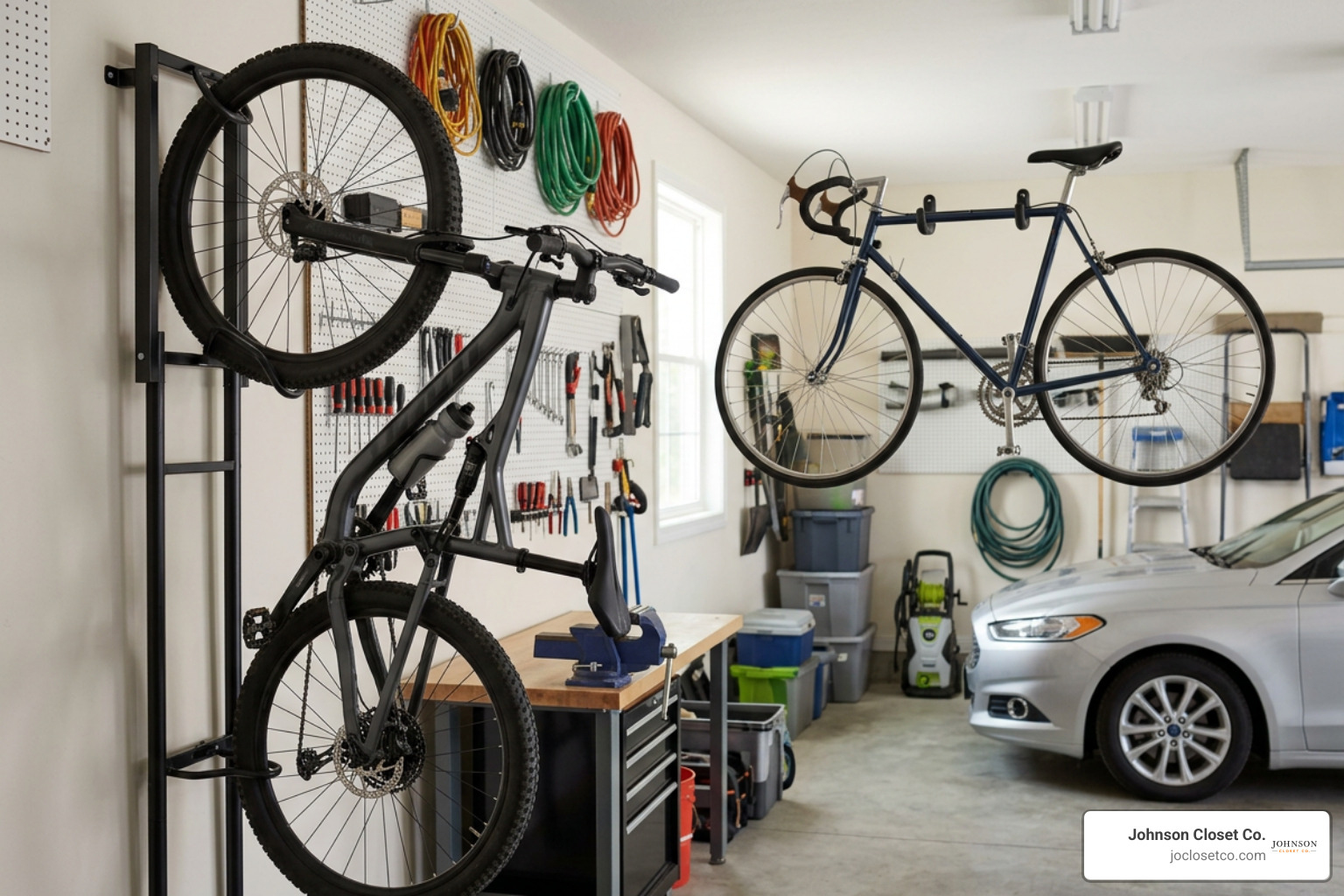
When selecting the best bicycle storage systems garage setup for your home, you must first evaluate how your family uses the garage. Are you parking two full-sized SUVs inside every night, or do you have a dedicated workshop bay? Are you storing lightweight carbon road bikes, rugged downhill mountain bikes, or heavy-duty electric commuter bikes?
Storage solutions generally fall into three primary physical orientations: wall mounts (both vertical and horizontal), overhead ceiling systems, and freestanding floor stands. Choosing the right style depends directly on your garage layout, ceiling height, wall construction, and how often you pull each bike down for a ride.
| Storage System Type | Ideal Bike Count | Floor Space Impact | Typical Weight Limit Per Bike | Best For |
|---|---|---|---|---|
| Vertical Pivoting Wall Racks | 1–8 Bikes | Minimal (folds flush to wall) | Up to 77–121 lbs | Tight single or double bays, heavy e-bikes |
| Horizontal Wall Mounts | 1–2 Bikes | Moderate (protrudes handlebars width) | 40–65 lbs | Highlighting premium bikes, high ceilings |
| Track & Panel Wall Systems | 3–6 Bikes + Gear | Minimal to Moderate | 50–100 lbs (up to 500 lbs total) | Multi-bike families needing tool & gear integration |
| Overhead Gliders & Hoists | 2–6 Bikes | Zero floor footprint | 50–100 lbs total | High ceilings (9+ ft), seasonal bike storage |
| Freestanding Gravity Stands | 2–4 Bikes | Moderate floor footprint | 40–80 lbs total | Renters, zero-drilling drywall restrictions |
| Floor Stands / Wheel Docks | 1–5 Bikes | High floor footprint | No limit (rests on ground) | Daily riders, kids' bikes, no lifting required |
Wall-Mounted Bicycle Storage Systems Garage Configurations
Wall-mounted setups are the gold standard for freeing up garage floor space. By shifting the footprint from the concrete slab to vertical wall studs, you instantly regain walk aisles and car-door clearance.
Swivel & Pivoting Racks
The most significant evolution in garage bike storage is the vertical pivoting mount. Traditional fixed hooks force bikes to stick out perpendicular to the wall, eating up 4 to 5 feet of valuable floor width. In contrast, modern vertical pivoting wall racks allow you to swing the stored bike up to 160–180 degrees flat against the wall. A road bike will protrude only about 16 inches (400 mm) from the wall when fully swiveled, while wide mountain bike handlebars project roughly 39 inches (1 meter).
These designs also excel ergonomically: models like the Steadyrack Classic support up to 77 lbs (35 kg), while the reinforced ProFlex holds up to 121 lbs (55 kg). You simply pull the bike up onto its rear wheel and roll the front tire into the cradle without ever lifting the entire bike off the ground.
Horizontal Wall Hangers
Horizontal wall mounts cradle the bike's top tube or wheels parallel to the wall. Products like the PRO Bike Tool Wall Hanger (rated to 48.5 lbs) or the Dirza Wall Mount (rated up to 65 lbs) turn your bicycle into functional wall art. However, horizontal racks require a wide expanse of continuous wall space (roughly 6 feet per bike) and are best suited for storing one or two lightweight road or gravel bikes above workbenches or low shelving.
Modular Wall Track Systems
If you need to store four or more bikes along a single wall section, horizontal track systems provide unmatched versatility. The multi-bike wall storage system from StoreYourBoard uses industrial powder-coated steel tracks mounted across wall studs, supporting up to 500 lbs across multiple adjustable hooks. This allows you to slide, space, and reposition hooks using quick-release pins as your bike collection evolves.
Similarly, modular solutions like the Tilt & Pivot Garage Bike Rack can organize between 2 and 8 bikes with rotating tire baskets that fold flat when empty, accommodating tire widths up to 3 inches.
Overhead Bicycle Storage Systems Garage Solutions
When wall space is already occupied by workbenches, utility panels, or cabinetry, the ceiling represents the ultimate untapped storage frontier.
Sliding Ceiling Tracks
Ceiling gliders solve the problem of hard-to-reach overhead bikes. The Saris Cycle Glide 4 mounts directly to ceiling joists and stores up to four bikes (50 lbs each) on a sliding track system, accommodating wheelbases up to 56 inches and tires up to 2.5 inches. You can slide individual bikes along the rails to easily access the exact one you want without unhooking the others. For heavier setups, commercial-grade gliders like the Bike Slide™ Pro utilize a 94-inch rail span built from heavy-gauge powder-coated steel to support standard bikes and e-bikes overhead.
Manual Pulley Hoists & Motorized Lifters
Manual rope-and-pulley hoists use mechanical advantage (typically a 2:1 or 4:1 ratio) with locking clutch mechanisms to safely suspend bikes above vehicle hoods. For the ultimate hands-free experience, smart motorized systems like the Multi-Bike Lifter provide a 100 lb total capacity for up to three bikes. Controlled via a smartphone app with built-in weight-sensing technology and automatic stops, it safely raises your bikes to the ceiling with zero physical strain.
Overhead storage requires a minimum ceiling height of 9 to 10 feet to ensure adequate clearance above parked vehicles and walking pathways.
Freestanding and Floor-to-Ceiling Gravity Racks
For homeowners who want to avoid drilling into walls or renters facing strict lease restrictions, freestanding solutions provide immediate organization without permanent structural modifications.
- Gravity Racks: Units like the Delta Cycle Michelangelo Two Bike Gravity Stand (rated for 80 lbs total) lean securely against the drywall using basic physics and rubberized contact pads, cradling two bikes vertically without a single screw.
- Tension Poles: Floor-to-ceiling telescoping columns, such as the Topeak TwoUp Indoor Bike Storage Stand (supporting 39.7 lbs per hook and 158.7 lbs total), brace tightly between the concrete slab and ceiling joists.
- Floor Wheel Docks: Floor stands like the BirdRock Home 3 Bike Stand rest directly on the garage floor, accepting fat tires up to 4 inches wide. While they consume floor real estate, they require zero lifting—making them a favorite for kids' daily cruisers.
Key Factors When Evaluating Garage Bike Storage
Choosing the ideal storage system requires matching your equipment's physical dimensions to your garage's architectural capabilities.
Bike Geometry and Component Compatibility
Modern bicycles feature diverse frame shapes, tire dimensions, and sensitive hydraulic components that require specific storage considerations:
- Tire Width and Wheel Diameter: Standard road bikes run 23–28mm tires, gravel bikes run 38–45mm, mountain bikes span 2.2–2.6 inches, and fat bikes reach 4.0–5.0 inches. Make sure your hook or cradle depth matches your tire profile. The Steadyrack Classic fits wheels from 20 to 29 inches and tires up to 2.1 inches, while dedicated fat-tire models accommodate wide rubber.
- Fender Clearance: Traditional hanging hooks that clamp directly between the tire and rim can crush or bend full-coverage commuter fenders. If your bike has fenders, opt for bottom-cradle wheel trays or frame-support hooks.
- Hydraulic Brakes & Suspension: Storing bikes vertically on their rear or front wheel is completely safe for modern sealed hydraulic disc brakes and suspension forks. In fact, hanging a bike upright allows suspension fork oil to migrate toward the upper foam rings and wiper seals, keeping them lubricated. If a bike sits vertically for months, a few quick squeezes of the brake lever will clear any minor air migration in the brake lines.
- Handlebar Width: Modern trail and enduro mountain bike handlebars span 760mm to 800mm (30–32 inches). When mounting multiple wide-bar bikes side-by-side, fixed hooks cause bars to tangle. Using swivel mounts or alternating rack heights resolves this bottleneck.
Spacing and Layout Optimization for Multi-Bike Households
To maximize every square foot of your garage wall without creating a tangled mess of pedals and brake levers, proper spacing layout is critical:
- Staggered Heights: When installing vertical wall hooks, alternate your mounting height by 8 to 12 inches between adjacent bikes. Staggering ensures that wide handlebars sit above or below the handlebars of the neighboring bike, allowing you to space wall mounts as close as 14 to 16 inches apart along the wall stud line.
- Pivot Clearance: If using 180-degree swivel racks, plan for at least 16 to 18 inches of lateral clearance from interior door frames, light switches, and garage door track hardware.
- Vehicle Buffer: Maintain a minimum 36-inch clear aisle between your vehicle's side mirrors and the outer edge of stored bikes to ensure comfortable loading and prevent accidental scratches.
Integrating Bike Storage with Garage Cabinets and Gear Organization
Bicycles rarely exist in isolation; they bring along helmets, riding shoes, floor pumps, hydration packs, spare tubes, and dirty drivetrain tools. Storing bikes on an isolated hook while scattering gear across random shelves creates visual and functional clutter.
At Jo Closet Co., we design comprehensive, tailored garage environments across the Phoenix Valley—including Scottsdale, Gilbert, Chandler, Mesa, and Tempe. By combining precision in-house CNC-manufactured cabinetry with heavy-duty bike storage hardware, we create cohesive modular stations where every component has a dedicated home.
You can integrate your bike wall directly alongside a custom garage cycle storage workstation. For example, pairing vertical swivel racks with enclosed heavy-duty garage cabinet storage keeps your specialty lubes, floor pumps, and riding gear cleanly tucked behind custom doors while keeping your bikes accessible for daily rides.
Frequently Asked Questions About Garage Bike Storage
Does hanging a bike vertically damage hydraulic brakes or suspension forks?
No. Modern hydraulic brake systems from major manufacturers are completely sealed closed loops. Hanging a bike vertically by the front or rear wheel will not cause fluid leaks or brake failure. If a small air bubble happens to be trapped in the brake reservoir, it may temporarily migrate into the line while hung; simply pump the brake levers 4 to 5 times once the bike is back on the ground to restore a firm lever feel. For suspension forks, vertical hanging actually helps keep the upper wiper seals moist by allowing internal lubricating oil to bathe the foam rings.
How much weight can typical garage bike racks support for e-bikes?
Standard single-bike wall hooks generally hold between 30 and 50 lbs, which is insufficient for many 50–75 lb electric bicycles. However, heavy-duty storage hooks like the Impresa 4-Pack support up to 100 lbs per hook, and the Park Tool 450 Storage Hook is rated to 114 lbs (52 kg). When storing e-bikes, look for heavy-duty systems like the Steadyrack ProFlex (121 lb rating) or the StoreYourBoard G-Bike Pro adjustable system (500 lb total capacity), and always anchor the mounting hardware directly into solid wood wall studs or masonry.
What is the best garage bike storage option for renters or drywall without accessible studs?
The best drill-free, renter-friendly option is a gravity-based freestanding stand (like the Delta Cycle Michelangelo) or a telescoping floor-to-ceiling tension column (such as the Topeak TwoUp). These systems rely on downward gravity or vertical tension to support 2 to 4 bikes without puncturing drywall. If you must use wall mounts on drywall without accessible studs, install a horizontal wood ledger board (2x4 or 2x6) anchored across the nearest structural studs, and then mount your bike hooks directly into the ledger.
Conclusion
Reclaiming your garage floor from a pile of leaning bikes doesn't just protect your expensive cycling investments—it transforms your entire garage into a functional, organized extension of your home. Whether you need compact swivel wall mounts, overhead ceiling gliders for seasonal cruisers, or industrial multi-bike tracks for heavy e-bikes, selecting the right system comes down to weight capacity, bike dimensions, and spatial flow.
If you are located in the Phoenix Valley and want an exact-fit, built-to-last setup that seamlessly incorporates bicycle racks, workbenches, and custom-milled cabinetry, our team is here to help. Schedule a custom garage cycle storage consultation with Jo Closet Co. today, and let us design the ultimate organized garage tailored to your lifestyle.