
Reclaim Your Floor With Built-In Garage Bike Storage
Reclaim Your Floor With Built-In Garage Bike Storage
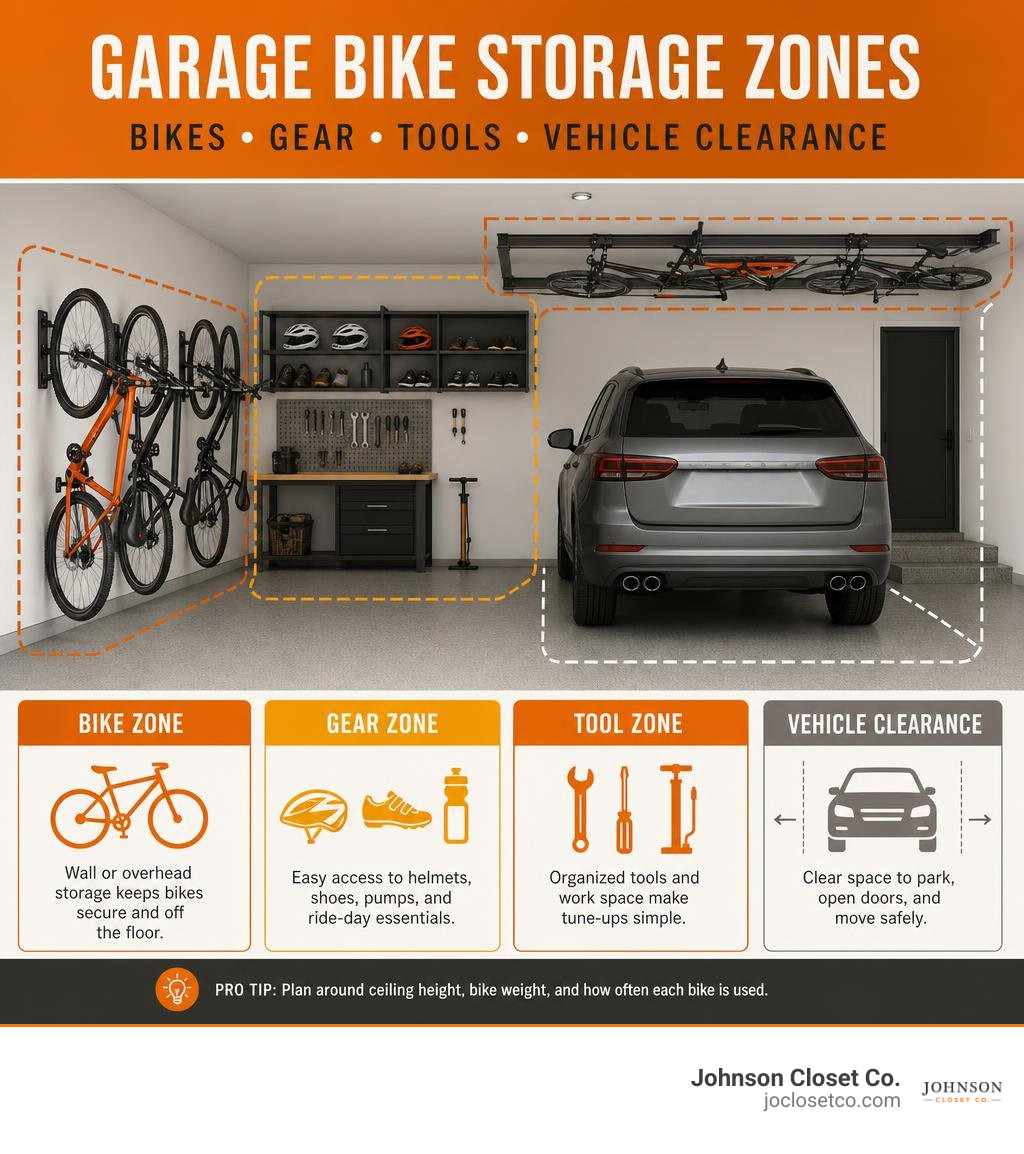
The best built-in garage bike storage system puts each bike on a wall or overhead rail, matched to how often you ride and how much weight it carries. Use vertical wall racks for daily-use bikes, sliding ceiling storage for bikes you use less often, and heavy-duty tracks or roll-in cradles for e-bikes. Plan the layout around stud or joist locations, handlebar clearance, and enough room to park or walk safely.
A well-designed system does more than lift bikes off the floor. It creates a clear home for helmets, pumps, shoes, locks, and repair tools - without turning the garage into another cluttered room. Staggered wall positions can help handlebars clear one another, while modular shelves and hooks keep ride-day gear close by.
The right choice depends on your garage ceiling height, bike weights, vehicle space, and whether everyone in the household can safely reach and return their bike.
I'm Chris Johnson, and the options below will help you choose a bike-storage layout that fits your garage and daily routine.
Primary Types of Built-In Garage Bike Storage Systems
Choosing the best setup starts with understanding how each storage mechanism operates. High-grade garage storage relies on industrial-strength, powder-coated steel hardware and solid mounting points to ensure structural stability across Arizona's hot summer seasons.

Vertical Wall-Mounted Track Systems
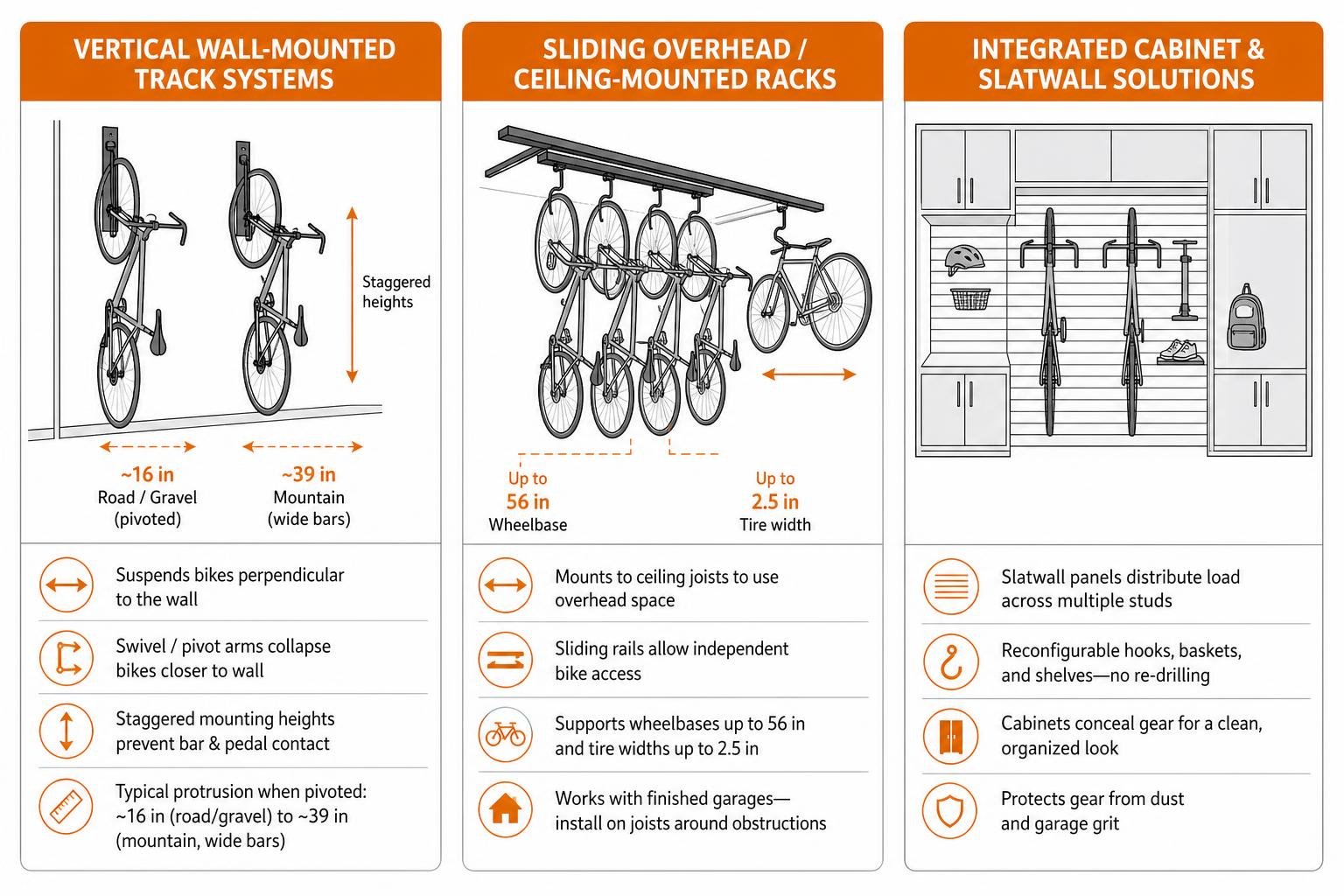
Vertical track systems suspend bikes perpendicular to the wall by their front or rear wheels. Leading track setups feature swivel or pivoting arms that allow hanging bikes to swing side-to-side. This pivot action collapses wide bikes closer to the wall, shrinking their overall footprint.
When planning wall clearance, consider handlebar width:
- Road and gravel bikes typically protrude roughly 16 inches (400 mm) from the wall when pivoted.
- Mountain bikes with wide handlebars can project up to 39 inches (1 meter) from the mounting surface.
To prevent handlebars and pedals from tangling, vertical wall systems use staggered mounting heights (alternating high and low positions). Staggering adjacent racks allows you to position bikes closer together horizontally along the wall while keeping bars and brake levers from knocking against each other.
Sliding Overhead and Ceiling-Mounted Racks
Overhead storage utilizes vertical volume that often goes unused above parked cars. Commercial systems like the Saris Cycle Glide 4 :: Best Space-Saving Bike Storage Solution or systems engineered by Cycle Glide Bicycle Storage System | Saris mount directly to ceiling joists. These units support wheelbases up to 56 inches and tire widths up to 2.5 inches, handling standard bikes with ease.
Similarly, overhead channels like the Bike Slide™ Pro utilize 94-inch rail spans to secure up to four bikes. The primary benefit of a sliding overhead rack is independent access: you can slide neighboring bikes along horizontal glider channels to unhook a single bike without taking down the rest.
When installing ceiling systems in finished garages, identify structural ceiling joists accurately and work around acoustic drywall channels or garage door opener tracks.
Integrated Cabinet and Slatwall Solutions
For an organized aesthetic, built-in slatwall channels and enclosed garage cabinets house bikes and accessories in one continuous, custom-fit profile. Heavy-duty aluminum-reinforced PVC slatwall panels distribute load weight across multiple wall studs, allowing you to reconfigure bike hooks, wire baskets, and shelving brackets without re-drilling drywall.
When cycling gear is integrated into custom cabinetry, floor pumps, shoes, hydration packs, and spare components disappear behind sleek, flush doors, shielding valuable gear from dust and garage grit.
Choosing the Right System: Wall vs. Ceiling vs. Freestanding
Every garage layout presents unique constraints regarding door swings, vehicle hoods, and ceiling heights. Evaluating how these systems compare side-by-side simplifies finding the right fit for your home.
| Storage System Type | Accessibility Speed | Space Efficiency | Installation Requirement | Best Suited For |
|---|---|---|---|---|
| Vertical Wall Track (Pivoting) | Instant (5–10 seconds) | High (frees floor, swings flat) | Wall studs or masonry anchor | Daily commuters, road bikes, mountain bikes |
| Sliding Ceiling Mount | Moderate (15–30 seconds) | Maximum (uses overhead air space) | Ceiling joists (solid structural wood) | Seasonal bikes, multi-bike family fleets, low walls |
| Adjustable Heavy-Duty Wall Rails | Fast (10 seconds) | High (accommodates gear shelves) | Dual-stud horizontal rail | Mixed collections: adult, kid, and e-bikes |
| Freestanding Floor/Column Racks | Instant | Low (occupies floor footprint) | No drilling required | Rental properties, temporary setups |
Evaluating Garage Layout and Ceiling Clearances
If your garage features 9-foot to 10-foot ceilings, overhead sliding gliders keep bicycles parked safely above vehicle hoods without interfering with roll-up garage door pathways. For garages with standard 8-foot ceilings, vertical wall tracks installed on side walls or the back wall avoid restricting vehicle door swings.
Homeowners exploring custom construction projects often reference hands-on resources like 5 DIY Bike Storage Options For Any Garage or Shed to understand the geometry of wall clearances before committing to permanent storage infrastructure.
Storing Heavy E-Bikes and Fat Tire Bikes with Built-In Garage Bike Storage
Electric commuter bikes and e-MTBs regularly weigh between 45 and 85 pounds. Lifting these bikes onto overhead ceiling hooks can pose a safety risk.
For heavy e-bikes and wide fat-tire rigs:
- Opt for vertical floor-to-wall roll-in cradles or pivoting heavy-duty racks. Modern high-capacity pivoting mounts can handle bikes weighing up to 121 lbs (55 kg).
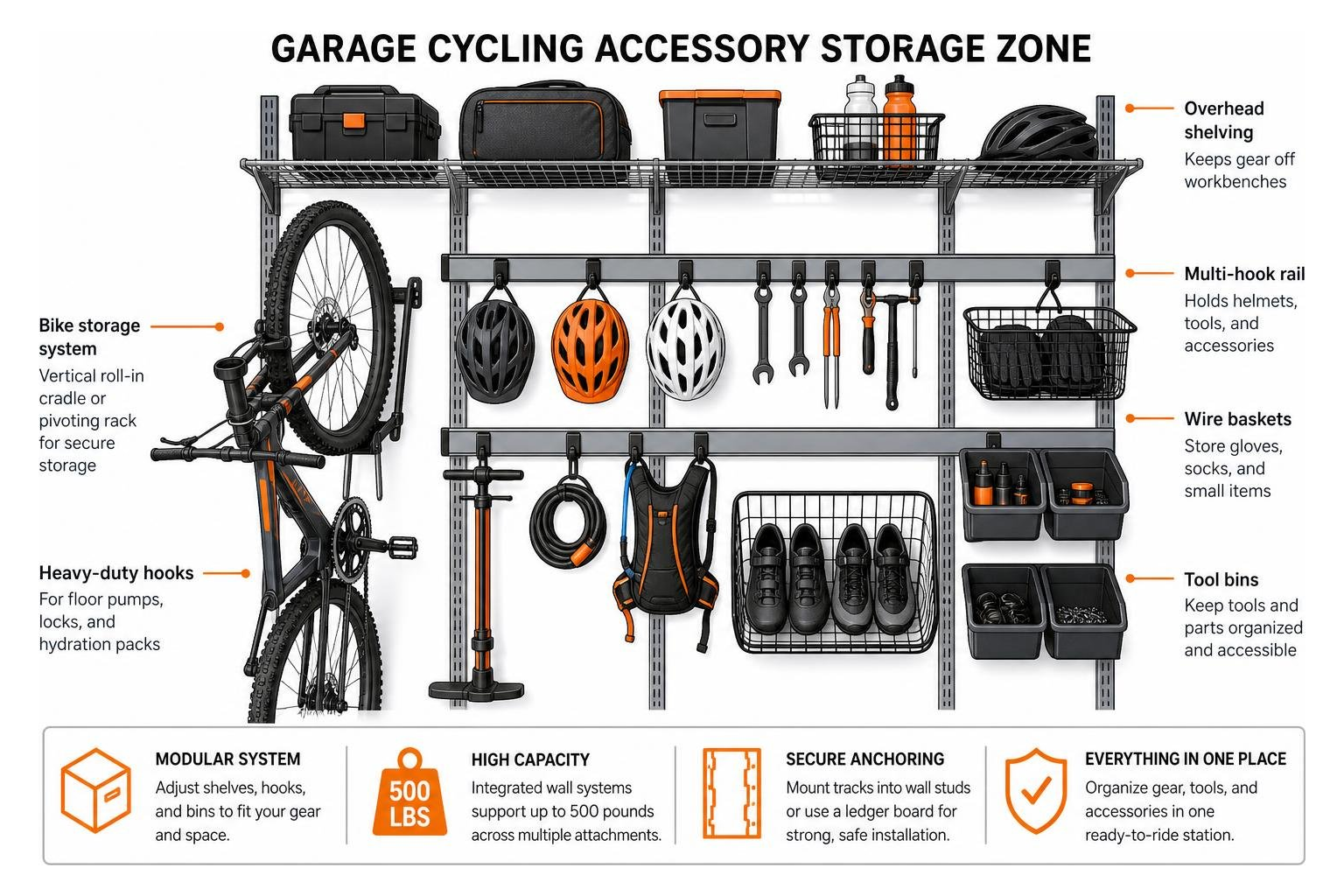
- Integrated wall systems like the G-Bike Pro | Adjustable Wall Storage System | Holds 500 lbs feature rigid steel rails capable of handling up to 500 pounds across multiple heavy attachments.
- Look for wheel cradles that roll the rear wheel backward to engage the front hook, eliminating the need to deadlift the entire bike off the ground.
- Verify tire tray widths to ensure wide 3-inch to 5-inch fat bike tires sit securely without pinching rims or sidewalls.
Essential Structural and Safety Considerations for Installation
Proper anchoring ensures your built-in storage carries heavy dynamic loads without pulling free from the wall or ceiling framing.
Wall Stud Anchoring and Weight Capacities
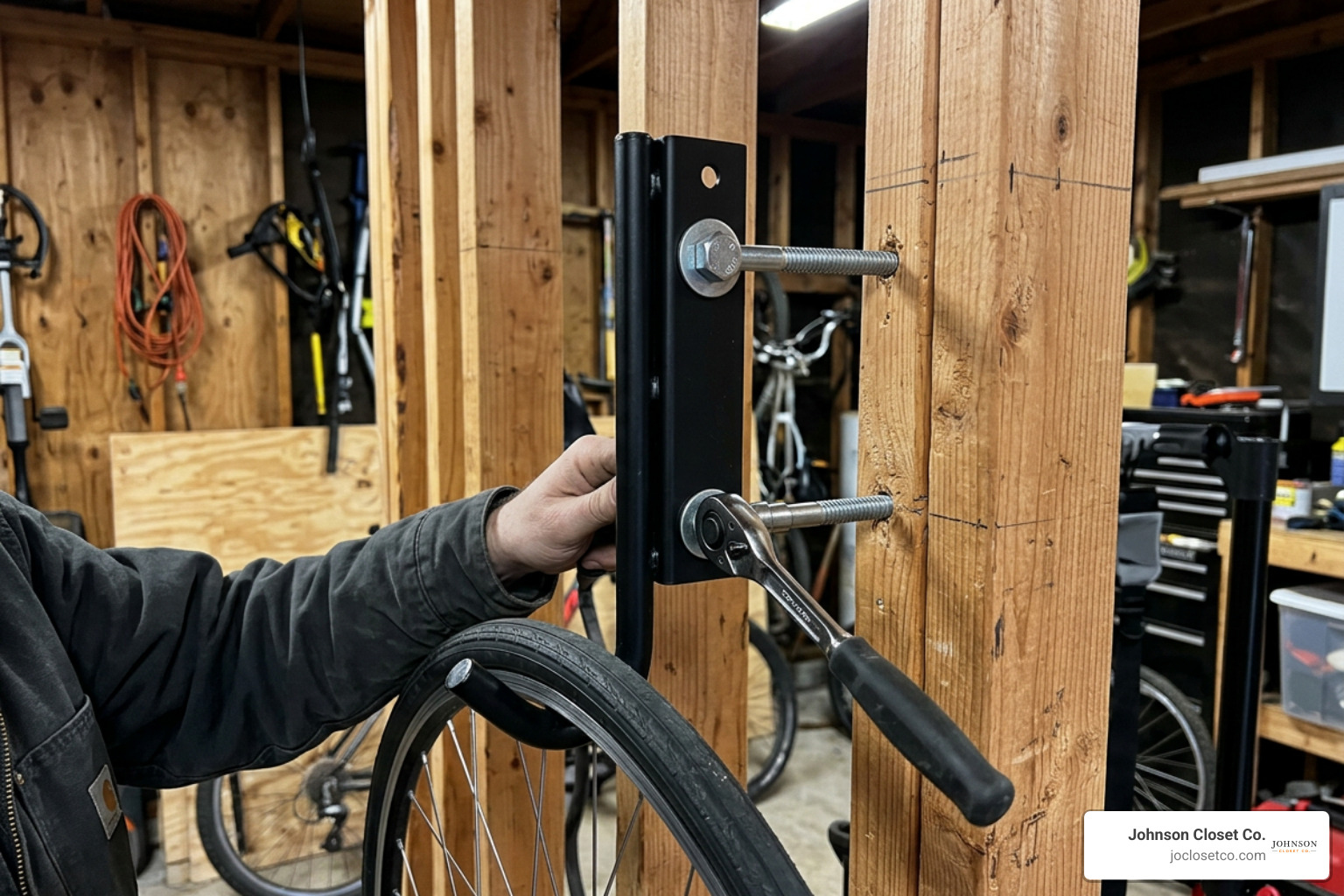
Standard residential drywall has minimal load-bearing capacity for hanging items. Every primary wall track and ceiling bracket must anchor directly into solid framing:
- Locate Framing: Use a multi-sensor stud finder to identify the center of 2x4 or 2x6 wall studs, or structural ceiling joists.
- Backing Lumber: When vertical stud spacing (typically 16 inches or 24 inches on-center) doesn't match your preferred rack spacing, mount a structural 2x8 horizontal ledger board across three or more wall studs using 3/8-inch lag screws. Racks can then be fastened securely anywhere along this backing board.
- Hardware Selection: Use heavy-duty structural screws or lag bolts with a minimum penetration of 2 to 2.5 inches into solid wood. Standard rubber-coated bike hooks can support up to 50 pounds each when threaded directly into sound framing lumber.
- Masonry Walls: For block or poured concrete garage walls common throughout Arizona, use zinc-plated sleeve anchors or heavy-gauge masonry screws rated for dynamic tension.
Hydraulic Brakes and Suspension Fork Protection
Cyclists often wonder whether storing modern mountain or gravel bikes vertically harms suspension seals or hydraulic disc brakes.
- Hydraulic Disc Brakes: Quality modern hydraulic brakes operate as sealed closed loops. Storing bikes vertically does not cause brake fluid to leak. If air bubbles exist inside the fluid reservoir, hanging the bike vertically may cause bubbles to migrate toward the lever, causing a temporary spongy feel. Squeezing the brake lever 5 to 10 times upon returning the bike to the floor moves fluid back into place, restoring firm lever feel.
- Suspension Forks & Dropper Posts: Storing bikes vertically helps keep suspension oil pooled against upper wiper seals, which keeps internal foam rings lubricated and reduces seal dry-rot in arid climates.
Integrating Gear, Helmet, and Accessory Organization
A comprehensive bike zone organizes helmets, shoes, tools, and hydration packs in one accessible station. Applying systematic closet organization principles to the garage transforms unused wall space into a tidy staging area.
Modular Shelving and Hook Attachments
Pairing wall-mounted bike racks with matching overhead shelving keeps cycling gear off workbenches. Incorporating closet shelving concepts—such as open-wire baskets for cycling gloves and shoes, multi-hook rails for helmets, and heavy-duty lower hooks for floor pumps—creates a dedicated departure point for every ride.
For practical, modular setups, heavy-gauge steel components such as the Gladiator Advanced Bike Storage V3.0 - Charcoal - The Brick or options from Bicycle Storage | Garage Bike Racks & Hoists pair cleanly alongside utility track systems. If you need local route planning or mechanical support, community cycling hubs like the Bicycle Cellar | Downtown Tempe provide valuable resources for Phoenix-area cyclists.
Garage Security and Anti-Theft Protection
Bicycles stored in residential garages remain common targets for opportunistic theft. Protect your bikes with dedicated security measures:
- Structural Anchor Points: Install a case-hardened steel ground or wall anchor bolted into the concrete floor slab using tamper-resistant expansion bolts.
- Heavy-Duty Locking Chains: Secure bike frames and rear wheels to the wall anchor using a 12mm to 16mm hardened steel chain or a Sold Secure Gold/Diamond rated U-lock.
- Garage Entry Protections: Ensure roll-up garage door emergency pull ropes are secured with zip ties to prevent exterior coat-hanger break-ins.
Frequently Asked Questions About Garage Bike Storage
How much spacing is required between bikes on a wall rack?
When mounting bikes side-by-side at equal heights, allow 16 to 20 inches (40 to 50 cm) between hook centers to clear wide handlebars. If you stagger rack heights alternating high and low (with an 8- to 12-inch vertical offset), you can reduce horizontal spacing down to 12 to 14 inches (30 to 35 cm) between racks without handlebars locking together.
Can you hang an electric bike vertically without damaging the frame or wheels?
Yes, as long as the rack is structurally rated for the bike's total weight. Modern aluminum and carbon bike rims withstand vertical suspension without damage because the load on the rim is significantly lower than the dynamic forces experienced when riding over rough roads or trails. However, always verify that your specific wall mount or hook is rated to support your e-bike's weight (typically 45 to 80+ lbs).
Is DIY bike storage safe compared to custom built-in systems?
DIY wood-block racks and basic ceiling hooks work well for light road bikes when secured into studs. However, commercial and custom CNC-manufactured built-in systems offer distinct structural advantages: higher certified load capacities (up to 500 lbs total track load), integrated scratch-resistant powder coatings, and precision-engineered pivot hinges that save floor space while ensuring structural reliability.
Conclusion
A well-planned bike storage system clears cluttered garage floors, protects expensive bicycle frames, and keeps your riding gear neatly organized. Whether you choose pivoting vertical wall tracks, sliding ceiling gliders, or integrated custom cabinetry, properly anchored systems keep your garage functional and organized for the long haul.
At Jo Closet Co., we use in-house precision CNC manufacturing to design custom garage cabinets, slatwall systems, and storage configurations tailored to homes across the Phoenix Valley, Scottsdale, Gilbert, Chandler, Mesa, and Tempe. To turn your cluttered garage into a clean, functional space, explore our specialized garage cycle storage solutions and schedule your tailored design consultation today.