
How to Organize Your Garage With Shelves
How to Organize Your Garage With Shelves
To organize with garage shelves, measure your available wall and floor space, then group items by how often you use them. Choose shelves that fit your bins and can safely hold their weight. Put heavy items on lower shelves, keep everyday gear within easy reach, and secure tall units as the instructions require.
I’m Chris Johnson, founder of Johnson Closet Co., and I’ve spent more than 30 years helping homeowners make storage work better. That same focus on function guides how I plan garage shelves: start with what you need to store, then give each item a useful place.
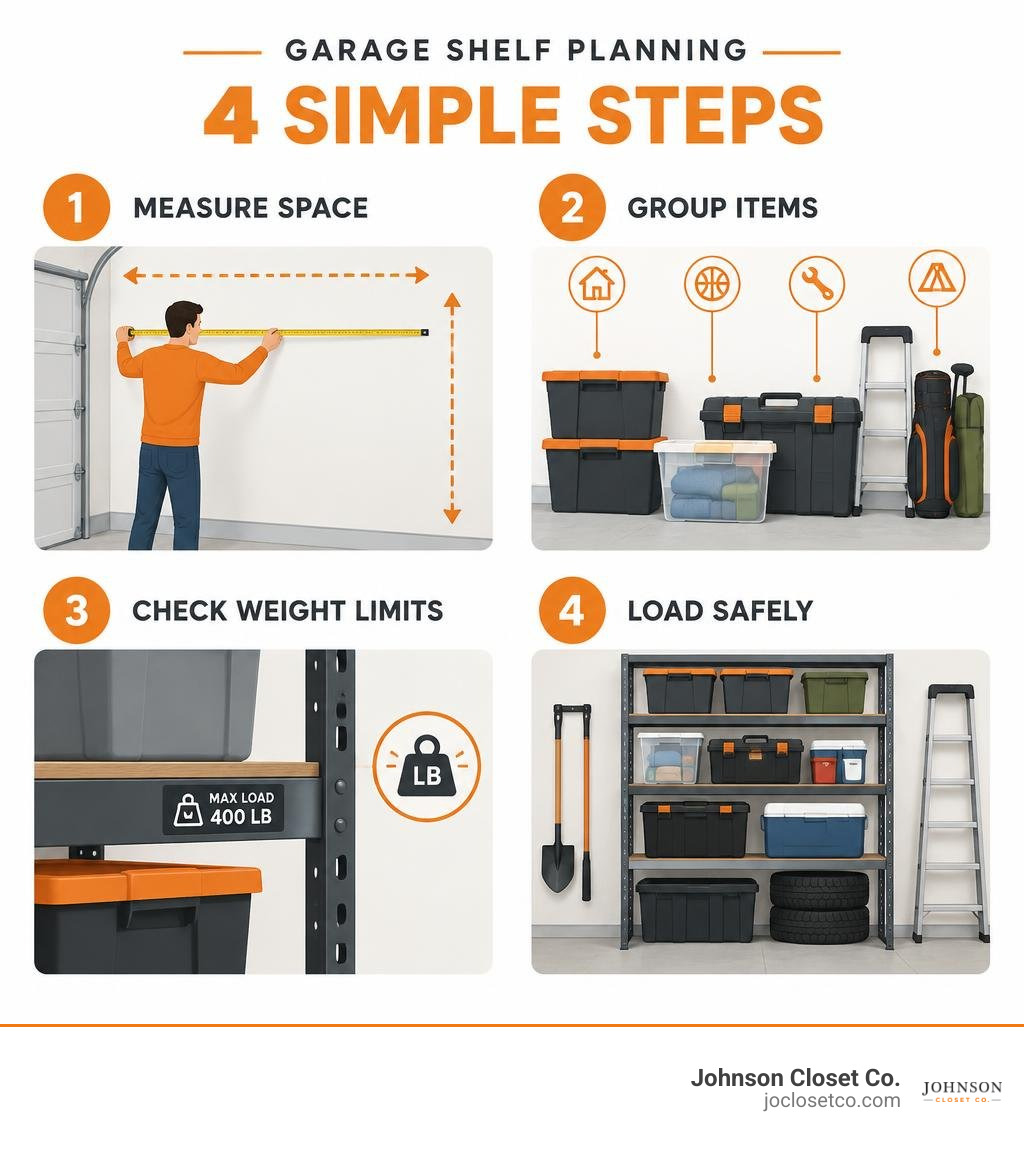
A cluttered garage does not just steal parking space—it turns simple home projects into time-consuming scavenger hunts. When items end up stacked haphazardly on concrete slabs, finding a basic socket set or seasonal storage bin requires shifting boxes, untangling extension cords, and squeezing past crowded vehicles.
Optimizing vertical real estate frees up valuable square footage and restores order to your workspace. By installing purposeful, well-planned storage units, you protect your gear from moisture, eliminate trip hazards, and create a functional layout that works effortlessly year-round. Integrating these racks alongside dedicated home storage solutions allows you to turn an chaotic catchall area into an efficient extension of your home.
Choosing the Right Garage Shelves for Your Space
Selecting the right shelving system requires looking closely at what you intend to store, the physical dimensions of your layout, and the environmental conditions inside your garage. Shelving options range from affordable resin utility racks starting under $50 to heavy-duty, multi-bay industrial metal systems that cost several hundred dollars.
To choose the best setup, assess your inventory by weight, size, and frequency of use:
- Heavy, bulky equipment: Automotive parts, lawnmowers, paint cans, and heavy power tool kits need high-capacity industrial steel framing.
- Medium-weight household storage: Storage totes, sports gear, camping supplies, and small power tools fit comfortably on heavy-duty wire or mid-tier metal shelving.
- Lightweight, moisture-sensitive items: Gardening accessories, cleaning chemicals, car wash towels, and lightweight bins do well on ventilated plastic or wire racks.
| Material Type | Average Shelf Capacity | Best Suited For | Moisture & Rust Resistance | Assembly Complexity |
|---|---|---|---|---|
| Industrial Steel | 600 – 2,125 lbs | Heavy machinery, loaded toolboxes, shop gear | High (with powder coating or zinc finish) | Boltless / Snap-in (Rubber mallet) |
| Heavy-Gauge Wire | 250 – 800 lbs | Totes, boxed goods, pantry overflow, sports gear | Exceptional (Chrome, Zinc, or Epoxy coated) | Tool-free slip-sleeve collars |
| High-Density Resin/Plastic | 100 – 200 lbs | Cleaning supplies, paint, light totes, garden hand tools | Maximum (Impervious to rust, rot, and chemicals) | Interlocking push-fit (No tools required) |
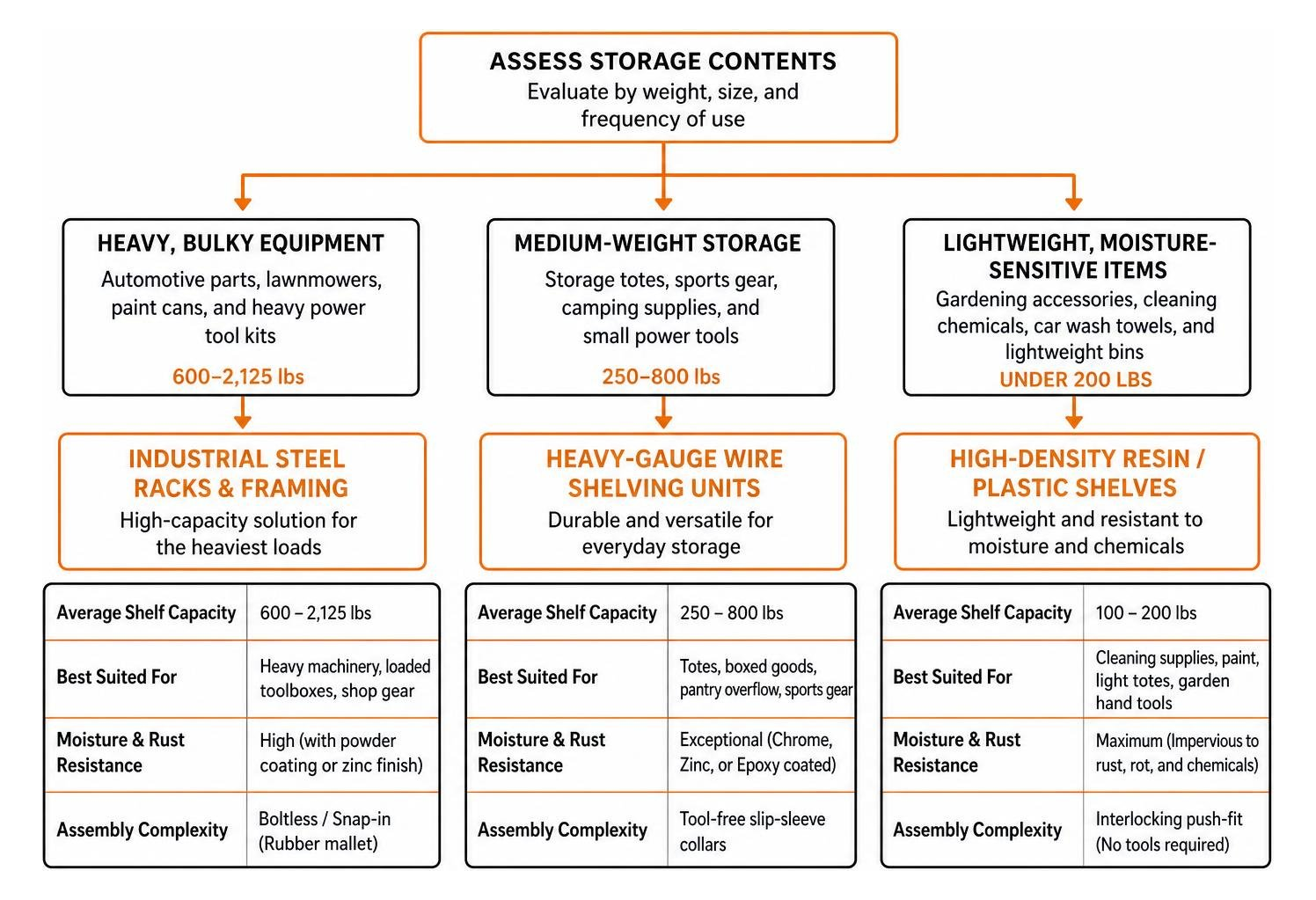
Steel, Wire, and Plastic Material Comparison
Each material offers specific strengths depending on how you use your space:
- Industrial Carbon Steel: Steel shelving units, such as those made from cold-rolled or rib-reinforced carbon steel, provide maximum strength and structural rigidity. They are ideal for storing heavy equipment without the risk of bowing. Look for durable powder-coated, hammer-tone, or zinc finishes to prevent surface oxidation.
- Heavy-Gauge Steel Wire: Wire racks offer an outstanding strength-to-weight ratio. The open-grid design prevents dust, dirt, and sawdust from accumulating on shelf surfaces while allowing garage lighting and HVAC airflow to circulate freely. Racks with NSF certification meet rigorous durability and sanitation standards, making them excellent for dry storage, bulk supplies, and household overflow.
- Molded Resin and Heavy-Duty Plastic: Molded resin units are impervious to moisture, automotive fluids, and rust. While they have lower load capacities per tier, their lightweight design makes them easy to wash down and assemble without tools.
Freestanding Racks vs. Wall-Mounted Systems
Choosing between freestanding floor units and wall-mounted shelves comes down to weight requirements, floor space, and desired flexibility.
- Freestanding Shelving Racks: These stand on your garage slab, distributing weight across four corner posts. Because they transfer loads directly to the floor, freestanding racks support substantial weights—from 1,500 lbs to over 8,000 lbs across an entire unit. They can be repositioned as your needs change and customized with modular add-ons.
- Wall-Mounted Shelving: Wall shelves anchor directly into structural wall studs, keeping your concrete floor completely clear. This setup makes sweeping, pressure washing, or parking vehicles much easier. Quality wall-mounted brackets typically hold up to 100 lbs per linear foot when properly anchored to solid studs. They work best for storage totes, lumber, and sports gear.
For a completely enclosed and polished appearance, pairing open metal racks with custom garage storage cabinets keeps valuable tools and hazardous materials safely out of sight behind locking doors.
Assessing Weight Capacity and Dimensions
Never guess when calculating the weight of your stored gear. Overloading shelves can cause horizontal beams to deflect, slip sleeves to fail, or freestanding units to buckle under stress.

Shelving load limits are always based on Uniformly Distributed Loads (UDL), as detailed in established shelving safety guidelines. A shelf rated for 600 lbs assumes the weight is spread evenly across the entire surface rather than concentrated in a single spot. Placing a dense 200 lb engine block directly in the center of an unreinforced shelf can bend the frame, even if the total capacity is rated much higher.
Weight Capacity and Sizing for Heavy-Duty Garage Shelves
Shelving falls into three primary weight classes:
- Light-to-Medium Duty (Under 250 – 500 lbs per shelf): Great for clear storage bins, seasonal decor, shoe organizers, and outdoor toys. Common residential options include lightweight utility racks and general-purpose storage shelving.
- Heavy-Duty Commercial (600 – 1,200 lbs per shelf): Built for automotive tools, loaded 27-gallon tough totes, hardware assortments, and small machinery. These units feature heavy-gauge frames and reinforced shelf decks built for these weights.
- Extra Heavy Industrial (1,250 – 2,125+ lbs per shelf): Engineered for commercial garages and heavy workshops, these multi-tier industrial steel racks handle total loads between 5,000 and 8,500 lbs.
When choosing dimensions, consider standard storage container sizes. Standard 27-gallon heavy-duty storage totes measure roughly 30 inches wide by 20 inches deep. A shelving rack with an 18-inch depth will leave container edges overhanging slightly, while a 24-inch depth accommodates large storage bins flush with the frame, maximizing safety and aisle clearance.
Mobile Casters vs. Fixed Leveling Feet
Many steel and wire shelf units come with both threaded leveling feet and rolling caster wheels. While casters make it easy to roll shelving away from the wall to sweep or retrieve dropped items, adding wheels significantly changes the unit's load capacity.
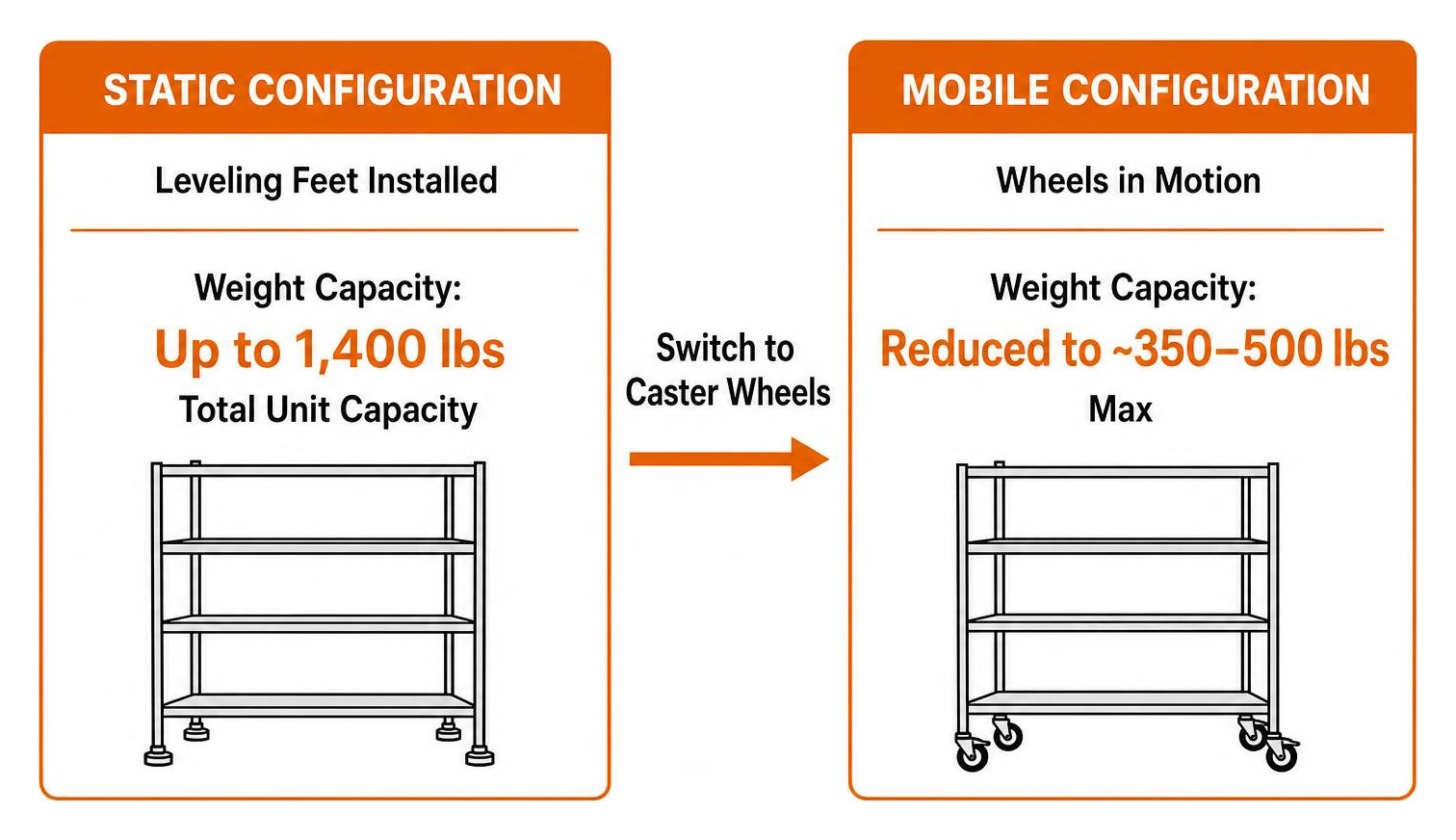
For example, a standard 4-shelf heavy-duty garage shelving unit can support up to 1,400 lbs on its static leveling feet (350 lbs per tier). When equipped with casters, its rolling dynamic capacity drops to 353 lbs total across all four shelves (roughly 88 lbs per shelf while in motion) to prevent wheel shear and tip hazards.
- Choose Leveling Feet: When storing heavy toolboxes, bulk hardware, or machinery that will remain stationary. Adjustable leveling feet also let you compensate for sloped concrete floors.
- Choose Rolling Casters: When you need mobile workstations, detailing carts, or lightweight sports gear racks that move around the garage. Always ensure at least two casters feature step-lock brakes.
Step-by-Step Installation and Layout Strategies
A reliable garage layout starts with careful planning before you open a single box of hardware.
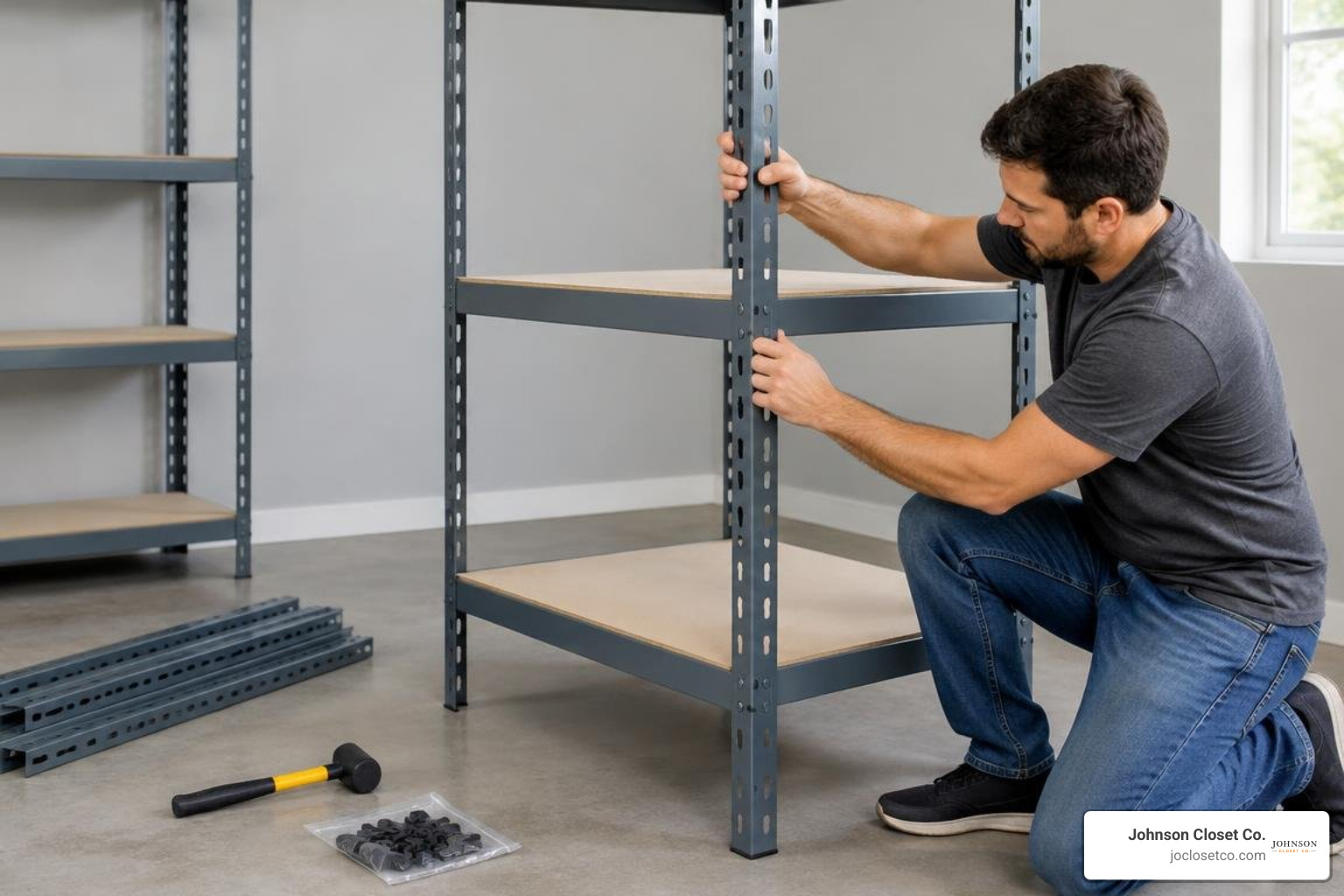
- Map Your Space and Measure Clearances: Measure wall length, ceiling height, and the swing clearance for overhead garage doors and vehicle doors. Ensure tall units leave at least 2 to 3 inches of clearance from vehicle mirrors.
- Zone Your Floor Plan: Divide your garage walls into functional zones:
- Zone 1 (Near Interior Entry): Everyday items, pet supplies, and grocery overflow.
- Zone 2 (Mid-Wall & Workbenches): Hand tools, hardware kits, and frequently used DIY gear.
- Zone 3 (Back Wall & Deep Corners): Bulky seasonal items, holiday bins, camping equipment, and heavy utility gear.
- Assemble on a Flat Surface: Clear a staging area on the garage slab. Lay out all upright posts, horizontal support beams, and shelf decks before assembly.
Modular Assembly and Height Adjustability
Modern garage racks feature boltless assembly systems that replace traditional nuts and bolts with keyhole, teardrop, or gourd-shaped slots. This design allows you to secure support beams using only a basic rubber mallet.
Adjustable tier systems let you adjust tier heights in 1-inch increments. This makes it easy to set custom shelf openings tailored to your specific totes and toolboxes rather than settling for fixed factory heights.
Many 5-tier modular units can also be split in half horizontally. Instead of building one 72-inch tall rack, you can assemble two side-by-side 36-inch units. Topped with a sturdy piece of plywood, this configuration creates a functional DIY workbench with organized storage underneath.
Safety, Installation, and Securing Your Garage Shelves
Safety should always come first when assembling tall or heavily loaded storage racks:
- Follow Safe Loading Practices: Place your heaviest totes, hydraulic jacks, and bulk containers on the bottom shelf. This lowers the unit's center of gravity and minimizes tipping risks.
- Anchor Tall Units: Any freestanding shelving unit over 60 inches tall should be securely anchored to structural wall studs using anti-tip straps or steel L-brackets.
- Check Weight Distribution: Avoid concentrating weight on outer edges or unsupported spans. Spread items evenly across wire decks or steel support channels.
- Coordinate Ceiling Clearance: When installing tall perimeter racks, remember overhead clearances. Utilizing space-saving ceiling bike hangers above clear floor spaces keeps bicycles elevated and prevents them from blocking access to your shelving tiers.
Maintenance, Organization, and Multi-Room Uses
Quality garage shelving requires very little upkeep, but a few simple habits will keep your setup sturdy and clean for years:
- Surface Protection: Wipe down powder-coated steel posts every few months with a damp microfiber cloth to remove abrasive dust, road salt, and dirt. Avoid harsh solvents that can degrade protective coatings.
- Inspect Fasteners and Seating: Periodically check boltless beam slots or wire shelf slip sleeves to ensure they remain fully seated in their locking positions, especially after shifting heavy equipment.
- Manage Moisture: In humid climates or unconditioned garages, keep shelves slightly off exterior walls to allow proper air circulation. Storing items inside sealed plastic totes protects sensitive paperwork, fabrics, and metal tools from ambient moisture.
- Consistent Labeling: Use high-contrast label tape or dry-erase tags on tote bin faces. Group items by category (e.g., "Plumbing Supplies," "Gardening," "Holiday Lights") so every family member knows where things belong.
Because heavy-duty modular racks offer such versatile utility, they transition easily into basements, utility rooms, commercial stockrooms, and home workshops whenever your storage needs evolve.
Frequently Asked Questions about Garage Storage
How much weight can standard garage shelves hold?
Weight capacities vary significantly depending on the design and materials used:
- Lightweight Resin Shelving: Typically holds 100 to 150 lbs per tier.
- Standard Residential Steel Wire Racks: Typically hold 250 to 350 lbs per tier when resting on leveling feet.
- Heavy-Duty Commercial Steel Racks: Support between 600 and 1,200 lbs per shelf tier.
- Industrial Multi-Beam Racks: Engineered to hold between 1,500 and 2,125+ lbs per shelf, providing overall unit capacities exceeding 8,000 lbs.
Can garage shelving units be split into two separate units?
Yes. Many 5-tier boltless steel shelving models use two-piece upright corner posts joined by central coupling pins or modular tie plates. This design allows you to assemble the unit as a single tall rack or split it into two waist-height shelving units. These twin units can be placed side-by-side in low-clearance areas or topped with a wood slab to create a sturdy garage workbench.
How do I prevent metal garage shelving from rusting?
To protect metal shelving from oxidation, choose units with durable protective finishes such as industrial powder coating, zinc plating, or chrome finishes. Avoid placing raw, unpainted metal frames directly on damp concrete where moisture can seep into the posts. Using plastic end caps or leveling feet creates a protective barrier against floor moisture. Finally, ensure your garage maintains good ventilation to minimize humidity buildup.
Conclusion
A well-organized garage starts with a clear plan: assess what you need to store, match your items to the right material and weight rating, and anchor your racks securely. Taking these simple steps transforms your garage from an unmanageable storage locker into a clean, functional workspace where every tool, tote, and piece of gear has its own dedicated place.
If you are looking for a tailored storage system, Jo Closet Co. designs and installs custom garage cabinets, workbenches, and built-in systems precision-cut using advanced in-house CNC technology. Combining open industrial shelving with custom-fit cabinets and dedicated garage cycle storage gives you a seamless, durable storage layout built specifically for your home and lifestyle.